

Showing all 13 results
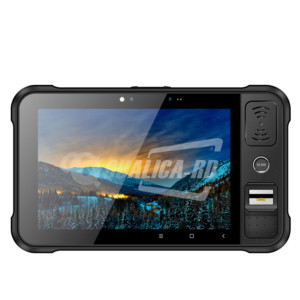
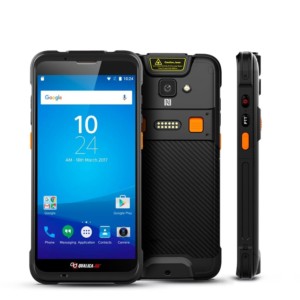
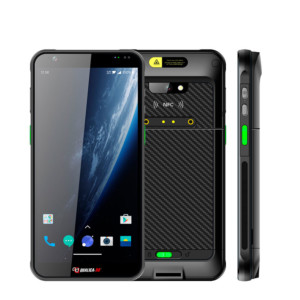
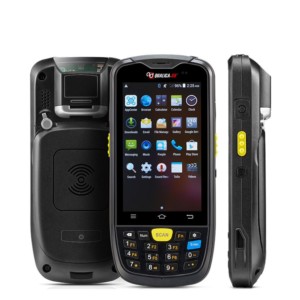
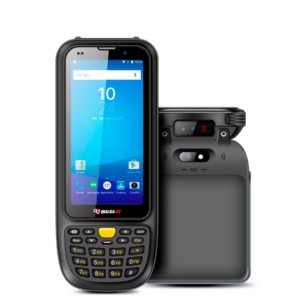
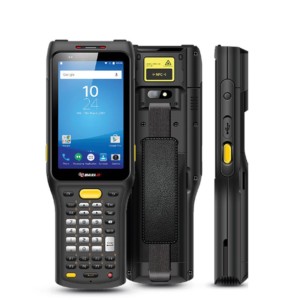
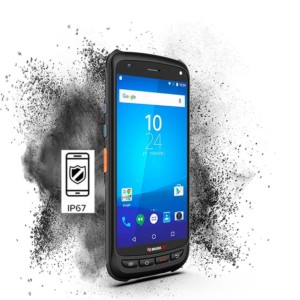
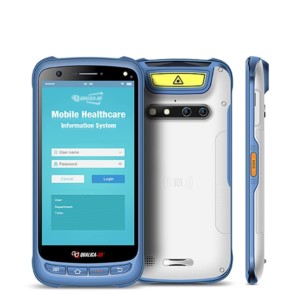
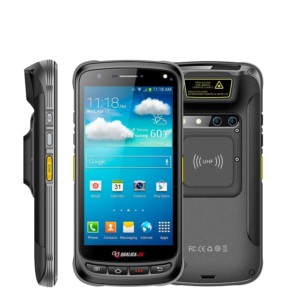
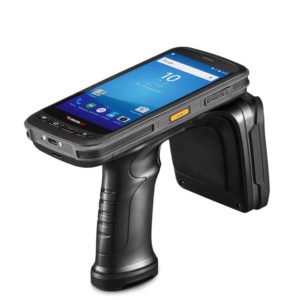
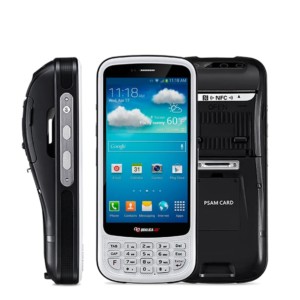
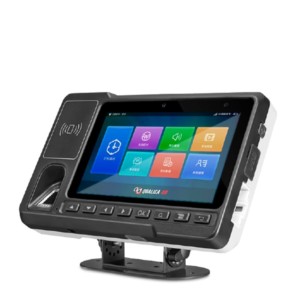
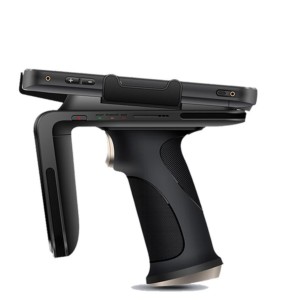
Readers for time and attendance and access control
The access and presence control systems are extremely useful for those places where an identification process is needed for access, an entry and exit time (or time of presence) needs to be registered, or where it is necessary to control that access is only allowed to people with a certain security profile. This access control can be done in many ways but the most used in companies to control the access of workers or control the time of presence in the company of employees is by readers installed at the entrance of the company. These readers can be of many types depending on the degree of security that we want to implement or that our facilities need. From the simplest ones, such as the numerical code assigned to each employee, to facial recognition or fingerprint systems, with completely non-transferable credentials.
A reader for access control by biometrics, fingerprint or RFID, is the most appropriate system to integrate an access control system and presence at work because it allows to implement any of the identification systems. Depending on the identification needs and the level of privacy of access to the facilities desired at any given time, it will be more worthwhile to use an RFID card model where a card or RFID access tags are sufficient (with the consequent risk of exchange of cards or tags) or a fingerprint or biometric identification system will be necessary, where the identification is unique and non-transferable by necessity. The lighting conditions, the level of access, the type of work and the area of the facility where it is implemented will determine the type of access control system the organization needs.
- The RFID access control system is compact and with very small dimensions that can be integrated anywhere and allow access by opening doors, turnstiles or any other system. These models usually have a very simple software that identifies the user with his card, although it does not guarantee that the user who owns the card is the one who has activated the access control.
- The fingerprint access control system, although it requires a higher volume of equipment, can be located almost anywhere and its identification system is unique and non-transferable. It has a reader that detects when a person puts his finger on the fingerprint reader and the scanning of the fingerprint is immediate, allowing an unequivocal and completely private access.
- The biometric reading access control system consists of a device with a camera and an infrared lighting system that, when it detects a human figure in front of it, activates the scanner by detecting key points on the user's face. These data are contrasted with those configured in the user's registration in the access control system and, if they are correct, are automatically validated. These systems are completely secure and, like the facial identification systems of mobile devices, do not differentiate between having closed eyes, open eyes or forms of facial expression.
Time and attendance control at work
Undoubtedly this reader system, either fingerprint, biometric or RFID, is the most used in companies to control the hours of each worker in the facilities, as well as to control the punctuality of each employee, being the most demanded system the fingerprint one because it prevents fraud by help of coworkers entering their code or passing the RFID card. Do you need a different access control system? Click here to see our access turnstiles. RFID cards, card printers and RFID tags such as key fobs and wristbands are also available.
What biometric technology do you need?
Every work environment requires a different identification method. Our range of biometric terminals covers all options, so you can choose the one that best suits your operations. Fingerprint: The most widely used method in employee time and attendance tracking. Fast, non-transferable, and with a false acceptance rate of less than 0.001%. Ideal for factories, warehouses, and offices where quick and reliable clock-in is required. Our terminals capture dry fingerprints, requiring no special maintenance. Facial recognition: Contactless identification. Ideal for environments where hygiene is critical—such as the food industry, healthcare sector, and laboratories—or where operators wear gloves and cannot use touch-based readers. Our terminals include anti-spoofing algorithms that prevent impersonation using photographs or videos. RFID and NFC: Reads proximity cards, key fobs, and RFID wristbands at frequencies of 125 kHz (EM), 13.56 MHz (MIFARE, DESFire, NFC). Compatible with existing Access Control Systems. Ideal for parking lots, gyms, corporate buildings, and events where mass, frictionless reading is required. UHF (long range): Remote reading up to 12 meters without the need for direct visual contact with the card. Perfect for vehicle access control in parking lots, logistics, loading docks, and industrial yards. Our UHF terminals read EPC Gen2 (ISO 18000-6C) tags on the move.Applications by Industry
QualicaRD biometric terminals are used across a wide range of industries. These are their most common applications. Attendance tracking and time and attendance: Replaces traditional time cards with a biometric system that eliminates fraudulent clock-ins. Our terminals record arrivals, departures, and breaks with biometric verification, export data to any HR software (A3, Sage, Nominasol, etc.), and comply with data protection regulations (GDPR) through biometric template encryption. Access control in industry and logistics: Restricts access to sensitive areas—warehouses, server rooms, laboratories, production lines—with biometric or RFID verification. Ruggedized terminals withstand dust, humidity, vibrations, and extreme temperatures (IP65 to IP67 depending on the model). Compatible with electric locks, turnstiles, barriers, and controllers via an integrated relay. Events, trade shows, and credentials: Access management for large-scale events with fast scanning of NFC wristbands, QR codes, and RFID cards. Our terminals with built-in printers allow tickets or credentials to be printed on-site after identity verification. Parking and vehicle control: Identification of authorized vehicles using long-range UHF tags, without the driver having to roll down the window. Integrates with automatic barriers, LPR cameras, and automated payment systems. Healthcare and critical environments: Access control for operating rooms, hospital pharmacies, restricted areas, and narcotics cabinets using contactless biometrics. Our terminals with integrated body temperature measurement allow for the addition of an extra health screening step at entrances to hospitals, nursing homes, and health centers. Gyms and sports centers: Replace physical membership cards with biometric or NFC access control. Users gain access using their fingerprint, phone, or an RFID wristband. This eliminates impersonation, reduces administrative costs, and improves the member experience.Integrated Reading Technologies
Our ruggedized terminals are more than just biometric readers. Each device integrates multiple data capture technologies into a single unit.| Technology | Compatible Models | Main Applications |
|---|---|---|
| Fingerprint Recognition | RD-66, RD-70, RD-71, RD-72 | Time attendance and access control |
| Facial Recognition | RD-66, RD-70, RD-71 | Contactless access control |
| RFID 125kHz / 13.56MHz | All models | Proximity card identification |
| NFC | All models | Smartphones and NFC wristbands |
| UHF EPC Gen2 | RD-60, RD-61, RD-71, RD-72, RD-6000 | Long-range RFID reading |
| 1D / 2D Barcode Scanner | All models | Logistics, inventory and traceability |
| Temperature Measurement | RD-70(T) | Health screening and access validation |
| Thermal Printer | RD-75 | On-site ticket and receipt printing |
| SAM Module | RD-71 | Secure transactions and advanced authentication |
Integration and Connectivity
All QualicaRD biometric terminals run on Android, making them easy to integrate with any management software. We offer:- SDK for developers: comprehensive documentation and APIs to integrate our terminals with ERPs, CRMs, and custom time-and-attendance software.
- Standard protocols: Wiegand, OSDP, and TCP/IP for connecting to access controllers and electronic locks.
- Relay output: built into all models to activate doors, turnstiles, barriers, and electromagnets directly from the terminal.
- Cloud connection: real-time synchronization of time and attendance records and access events. Centralized management of multiple devices from a web dashboard.
- Anti-passback: prevents the same user from swiping their card or fingerprint twice in a row in the same direction. Configurable by zone and by schedule.