
Business Hours: Monday to Thursday: 7:00 AM – 3:00 PM (Support until 5:00 PM) | Friday: 7:00 AM – 3:00 PM (Support until 2:30 PM)
(+34) 957 326 107
Business Hours: Monday to Thursday: 7:00 AM – 3:00 PM (Support until 5:00 PM) | Friday: 7:00 AM – 3:00 PM (Support until 2:30 PM)
Copyright © 2025 Qualicard. All Rights Reserved.


Technical Support
How does time tracking with geolocation work?

December 1, 2025
How does time and attendance control with geolocation work?
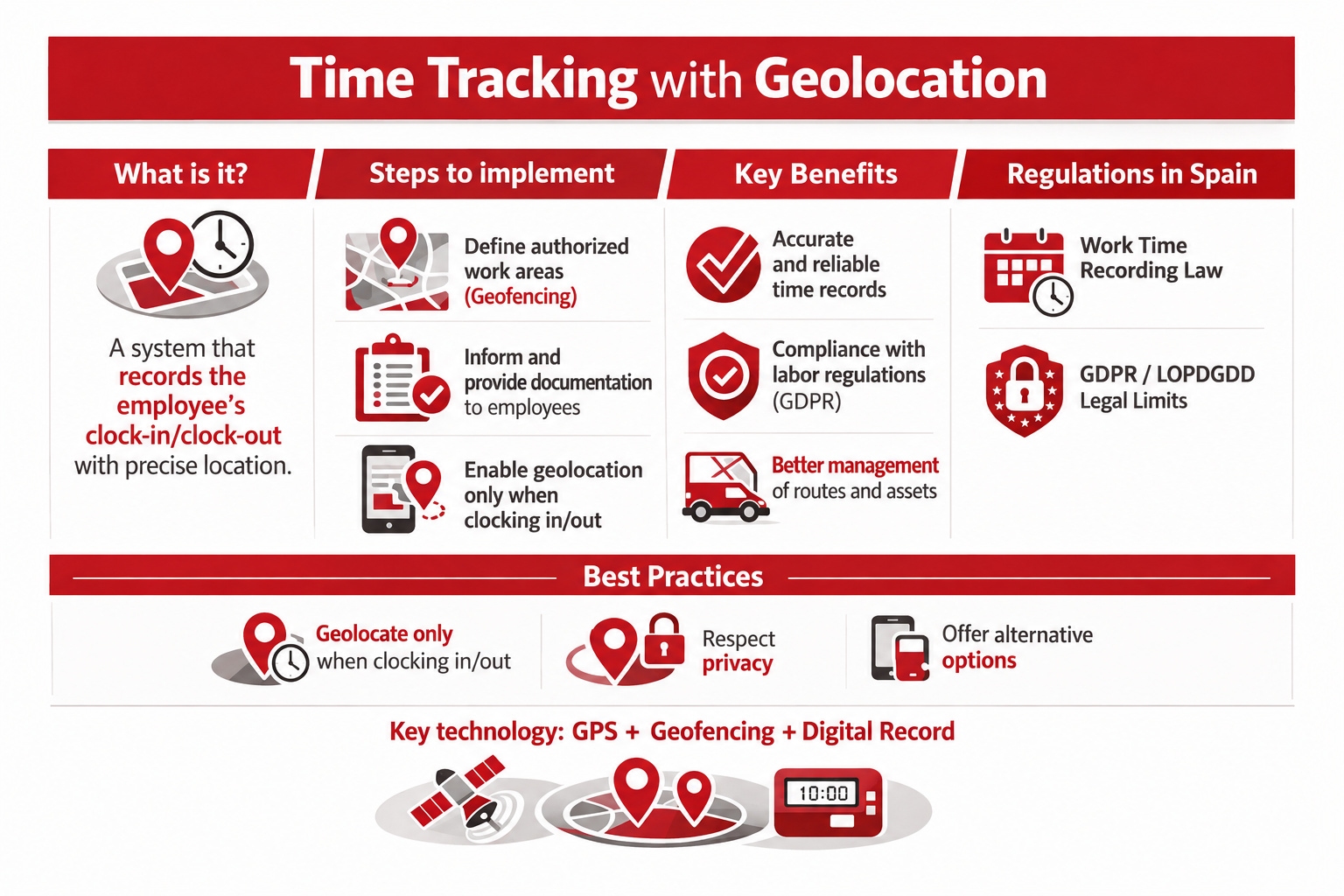
Time and attendance control with geolocation is an advanced modality within the recording and management of working hours that combines the capture of labor hours with the identification of the place from which the clock-in is performed. This technique has become especially relevant for companies with mobile teams, remote workers, or multiple locations, as it allows verifying more precisely and reliably that a worker has started or finished their shift from an authorized location. Unlike traditional methods that only record the entry and exit time, this system incorporates the geographical coordinates obtained through GPS or other positioning technologies of the devices used, such as smartphones or tablets, thus guaranteeing a more effective response to possible discrepancies in compliance with the working schedule.
In this article we will analyze how this system works, what benefits it provides, a comparative table with other time recording methodologies, tips for implementing it correctly, and what role access control plays within this context. The objective is to offer a comprehensive, formal, and informative guide to answer the search intent of users interested in understanding time and attendance control with geolocation and its practical applications.
What is time and attendance control with geolocation?
Time and attendance control with geolocation consists of recording not only the moment an employee starts and ends their working day, but also the exact place from which they make that record, using positioning technologies such as GPS or the IP data of the device. This method is generally applied through mobile applications or digital systems that capture and store the location only at the time of clocking in, without continuously tracking the person, which is important for complying with privacy regulations.
Unlike traditional time and attendance control, where only the entry and exit time is noted without indicating the place, geolocation adds an additional layer of verification that can be key for companies with field workers, sales representatives, or remote workers who are not always present at a physical office. This system can be integrated with human resources management and access control solutions to offer a comprehensive view of the working day.
How does time and attendance control with geolocation work?
The operation of time and attendance control with geolocation is based on the interaction between the worker’s device and a centralized system that validates both the time and the location. In many platforms, the employee uses their mobile phone or a specific application to clock in at the beginning and end of their working day. At that moment, the system records the GPS coordinates of the device, which are stored together with the timestamp, creating a reliable record of when and from where the clock-in was performed.
Some advanced applications also offer what is known as geofencing, which consists of defining authorized geographical areas (for example, the perimeter of a construction site or a client’s location). The system can alert or even block the clock-in if an attempt is made to register outside that predefined zone, which increases the precision and security of time and attendance control.
Basic steps of the process
- The worker opens the time and attendance application on their mobile device or authorized terminal.
- When pressing “clock in” or “clock out”, the system requests the GPS coordinates of the device.
- The software automatically records the time and location, associating them with the employee’s profile.
- If the clock-in is performed within a previously authorized zone (geofence), it is accepted; if not, an alert can be generated or the attempt blocked.
Traditional vs. geolocated time and attendance control
| Feature | Traditional time and attendance control | Time and attendance control with geolocation |
|---|---|---|
| Time recording | Entry and exit time only | Time and location of clock-in |
| Location verification | Not available | Yes, via GPS or IP |
| Fraud prevention | Basic | High, thanks to geofencing |
| Integration with access control | Optional | Direct and recommended |
| Legal compliance | Requires physical or digital forms without location | Requires consent and transparency, but is legal if used correctly |
Benefits of time and attendance control with geolocation
Implementing a time and attendance control system with geolocation provides multiple benefits both for the company and for the employees. Firstly, it significantly improves the accuracy of shift recording, since it validates that workers are physically in the authorized zone when clocking in. This is crucial to avoid fraudulent clock-ins or discrepancies in hours worked, especially with remote or traveling teams.
In addition, this system favors efficiency in personnel management by allowing the generation of detailed reports on times and locations, which facilitates planning and productivity analysis. It also contributes to compliance with current labor regulations by improving the traceability of records and reducing errors related to manual methods.
Legal and privacy aspects
The use of geolocation in time and attendance control is subject to data protection and privacy regulations. In countries like Spain, it is legal as long as data protection is respected, employees are clearly informed, and their consent is obtained, especially if a personal device is used. In addition, location data should only be captured at the moment of clocking in, not tracked continuously throughout the entire working day.
It is essential that companies design clear usage policies, explain how data will be stored and what security measures will be applied to protect workers’ information. This transparency is not only legally required but also builds trust among the workforce and reduces potential labor conflicts.
Tips for correctly implementing time tracking with geolocation
To ensure that time tracking with geolocation works effectively and in compliance with the law, it is advisable to follow a series of best practices. First, select a robust technological solution compatible with mobile devices, computers, or control terminals that can accurately capture both time and location.
Likewise, it is essential to design an internal policy that details how the data is used, who has access to it, and how long it will be retained. This policy must be clearly communicated to all employees to ensure their informed consent. Finally, it is suggested to provide training so that workers understand how to use the system, what benefits it offers, and how to protect their privacy.
How access control contributes to the geolocation system
Access control complements time tracking with geolocation by providing an additional layer of security that validates the employee’s identity at the same time as their location. For example, systems may require biometric authentication, PIN, or cards to access, preventing third parties from using other employees’ devices to clock in.
Integrating access control and geolocation allows companies to have a much more reliable and secure record of who has accessed a specific area and when, linking it directly to the hours log. This combination is especially useful in environments where physical security and accuracy in personnel management are priorities.
Frequently asked questions about how time tracking with geolocation works
To help you better understand how time tracking with geolocation works, we have compiled some of the most common questions among companies and workers. Below, we answer the three frequently asked questions that will clarify how this technology is applied, its legality, and its effectiveness in different work environments.
Is it legal to use geolocation for employee time tracking?
Yes, it is legal as long as personal data protection laws are respected and workers are properly informed. The use of geolocation must be limited to clock-in moments, not involve constant monitoring, and have the employee’s explicit consent. In addition, the company must justify the need for this system based on the type of work.
Does the geolocation system track the employee throughout their entire workday?
No. Time tracking with geolocation systems only capture the location at the moment of clocking in, whether at the beginning or end of the workday. It is not continuous tracking, which allows compliance with current privacy legislation and avoids invasion of the worker’s personal life.
What devices can be used to clock in with geolocation?
Employees can clock in using smartphones, tablets, or control terminals equipped with GPS technology or Internet connection. Time tracking applications with geolocation are usually available for iOS and Android operating systems, and in some cases they can also be used from a computer’s web browser, although with limitations in location accuracy.
Time tracking with geolocation represents a significant evolution in workday management, combining accuracy, security, and legal compliance. By recording not only the time but also the location of each clock-in, companies can ensure that their workers are where they should be at the right moment, reducing fraud and optimizing resource management.
Its proper implementation requires careful planning, clear policies, and total respect for employee privacy, but when carried out correctly, it can become a strategic tool to improve operational efficiency and the satisfaction of both employers and employees.
Share
Related News

Fingerprint vs Facial Recognition vs Palm: Which Biometric…
The B2B buyer’s dilemma You have to implement an access control or…
Go to Post

Benefits of attendance control for businesses
In today's business environment, where operational efficiency and transparency are key to…
Go to Post
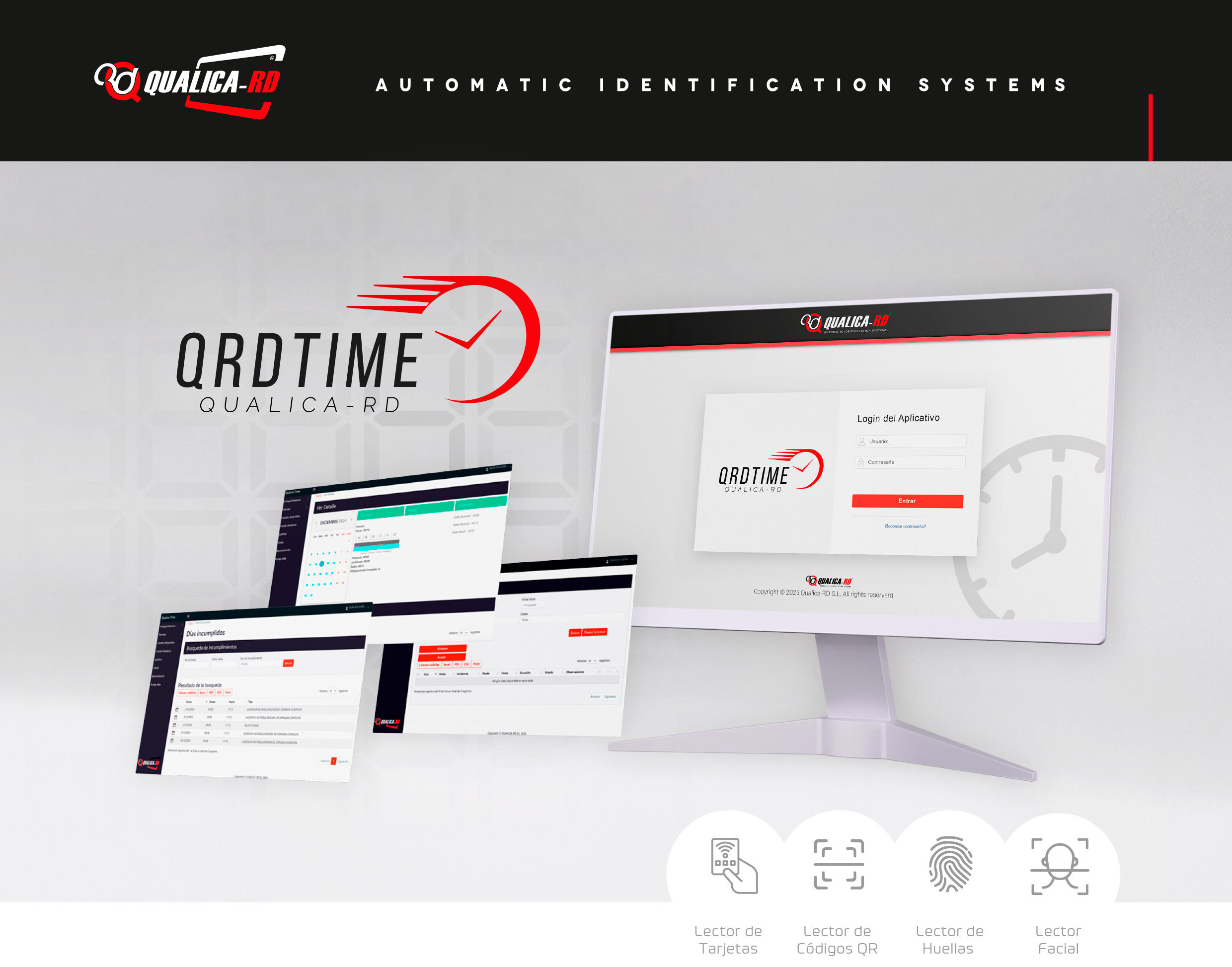
New QRDTIME Clock-In Software
In 2025, all companies in Spain will be required to implement a…
Go to Post