
Business Hours: Monday to Thursday: 7:00 AM – 3:00 PM (Support until 5:00 PM) | Friday: 7:00 AM – 3:00 PM (Support until 2:30 PM)
(+34) 957 326 107
Business Hours: Monday to Thursday: 7:00 AM – 3:00 PM (Support until 5:00 PM) | Friday: 7:00 AM – 3:00 PM (Support until 2:30 PM)
Copyright © 2025 Qualicard. All Rights Reserved.


Technical Support
Benefits of attendance control for businesses

October 10, 2025
In today’s business environment, where operational efficiency and transparency are key to maintaining a competitive edge, implementing an adequate time and attendance control has become a strategic factor for many organizations. This system goes beyond simply logging entries and exits: it enables companies to better manage their human capital, optimize resources, comply with labor regulations, and foster fairer and more organized work environments. In this article we will address the main benefits of time and attendance control for companies, how time and attendance systems contribute to different types of businesses (including the case of gyms) and we will present a comparative table to facilitate understanding.
What is time and attendance control?
Time and attendance control refers to the set of processes and tools that allow recording the attendance, schedules, breaks, and in some cases the location or context of workers or users of a service. As a redefinition, it is directly related to what is also known as attendance control. According to different sources, this system enables companies to “manage, monitor and report the attendance of their employees in an effective and efficient manner”.
In practice, a time and attendance control system may include clock-in terminals, biometric readers, mobile applications with geolocation, cloud platforms that integrate payroll, as well as automatic report generation.
Importance of time and attendance control in a company
The implementation of a time and attendance control system is not only a response to a technological trend, but is framed within several key requirements for companies:
- Regulatory compliance: In many countries there are legal obligations regarding the recording of working hours, breaks and workday.
- Transparency and reliability: Accurate registration avoids errors, assumptions or even fraud in clocking in.
- Operational visibility: It allows the Human Resources area and management to know real patterns of work, absences, overtime, shifts, etc.
- Optimization of time and resources: With accurate data, staff can be better allocated, overload reduced, and planning improved.
Consequently, beyond fulfilling an obligation, time and attendance control becomes a management tool that provides strategic value to the business.
Benefits of time and attendance control for companies
Below are the main benefits that the implementation of a time and attendance control system in a company provides:
- Improved productivity: Having a reliable record of schedules generates greater individual accountability, reduces downtime and allows quick action in the event of delays or absences.
- Reduction of absenteeism and tardiness: When employees know that a recording system exists, compliance with the workday becomes more evident. Companies can detect patterns of unjustified absences and take preventive measures.
- Resource optimization and efficient planning: With real-time data on attendance, shifts and availability, staff can be better allocated and overloads or gaps in operations avoided.
- Accuracy in payroll and overtime calculation: Digital recording avoids human errors, facilitates integration with payroll systems and ensures accurate payment.
- Transparency and improvement of the work environment: When presence rules are clear and recorded, greater trust is generated between employees and the company; the sense of arbitrariness is avoided.
- Legal compliance and protection against penalties: Recording the workday and breaks implies reducing risks of labor inspections, fines or litigation.
- Report generation and data analysis: The systems allow visualizing presence trends, overtime, areas with the highest absence, which supports decision-making.
Specific benefits for gyms or sports centers
In the case of companies in the fitness sector or gyms, the implementation of a time and attendance control system can also provide particular advantages:
For example, it allows keeping an accurate record of instructors’ and monitors’ schedules, managing shifts in group classes, supervising staff workload, controlling customer access and preventing fraud or unauthorized entries. Likewise, it can be linked with loyalty programs and member access to improve the customer experience and optimize the center’s operation.
What do time and attendance control systems contribute to a company or gym?
When talking about time and attendance control systems, we refer to platforms, devices and processes that allow:
- Recording entries and exits of employees or users.
- Managing shifts, breaks and rest periods accurately.
- Integrating with payroll or access systems (in the case of gyms).
- Generating reports and dashboards that help management observe key data.
Specifically, these systems provide the company or gym with the following elements:
- Real-time visibility: You can see who is present, who is working overtime, locate uncovered shifts or detect absenteeism patterns.
- Automation of administrative processes: Reduces workload in HR or customer management by integrating with payroll or member access.
- Improved experience for the employee or user: By having a transparent time and attendance control system, uncertainty regarding hours worked or access to the service is reduced.
- Operational cost optimization: By reducing unnecessary overtime, covering shifts efficiently, and preventing unauthorized access, costs are reduced.
- Data analysis and KPIs: You can measure indicators such as “average daily attendance hours”, “percentage of absences”, “average shift occupancy time” in gyms, etc.
- Scalability and flexibility: Modern systems allow the company or gym to grow without losing operational control or visibility, adapting to hybrid, remote, in-person or mixed schemes.
Comparative table: Benefits of time and attendance control for companies
| Benefit | Description | Impact on the company / gym |
|---|---|---|
| Improved productivity | Reliable recording of entries/exits, increased punctuality and less unproductive time. | Greater overall performance, better use of staff, in a gym optimization of classes and instructors. |
| Reduction of absenteeism and tardiness | Detection of patterns of non-attendance, application of preventive measures. | Fewer last-minute vacancies, less impact on operations, greater customer satisfaction. |
| Resource optimization and planning | Real visibility of staff availability, efficient assignments. | Less workload overload, adequate shift coverage, better service in gyms. |
| Accuracy in payroll and overtime | Elimination of human errors, integration with HR and payroll. | Fewer internal claims, labor cost control, financial compliance. |
| Transparency and improvement of the work environment | Clear policies, reliable records and perception of fairness. | Greater employee or user satisfaction, lower turnover, better environment. |
| Legal compliance and protection against penalties | Mandatory recording of workdays and breaks according to labor regulations. | Avoids fines, litigation, protects the company’s reputation. |
| Report generation and data analysis | Access to attendance metrics, overtime, pattern analysis. | Data-driven decision making, continuous improvement, internal benchmarking. |
How to successfully implement a time and attendance control system
For the time and attendance control system to provide all its benefits, it is necessary to follow a series of best practices:
First, clearly define clocking-in policies, shifts, breaks and responsibilities. Without a clear policy, the system can generate friction or interpretation errors.
Second, select the appropriate technology for the type of operation: from simple solutions in SMEs to integrated platforms for large companies or service centers.
Third, communicate with and train the team: ensuring that all employees or users (in the case of a gym) understand how the system is used, why it is implemented, and what benefits it brings to everyone.
Fourth, integrate with other key systems (payroll, shifts, user access) to maximize the utility of time and attendance control and reduce manual data entry.
Fifth, periodically review the data and carry out analysis: are there areas with more absences? What is the actual workload? Are shifts being used correctly? This continuous improvement cycle allows you to get the most out of the system.
In short, time and attendance control for companies represents an essential tool in the modern management of human capital. It is not only about monitoring schedules, but also about generating valuable information, fostering accountability, improving operational efficiency, and strengthening regulatory compliance.
From improving productivity and reducing absenteeism to generating strategic reports and providing a better experience for employees and customers, the benefits of time and attendance control are numerous and noteworthy. If your company or service center does not yet have a reliable system, now is the time to evaluate its adoption and turn it into an ally for growth.
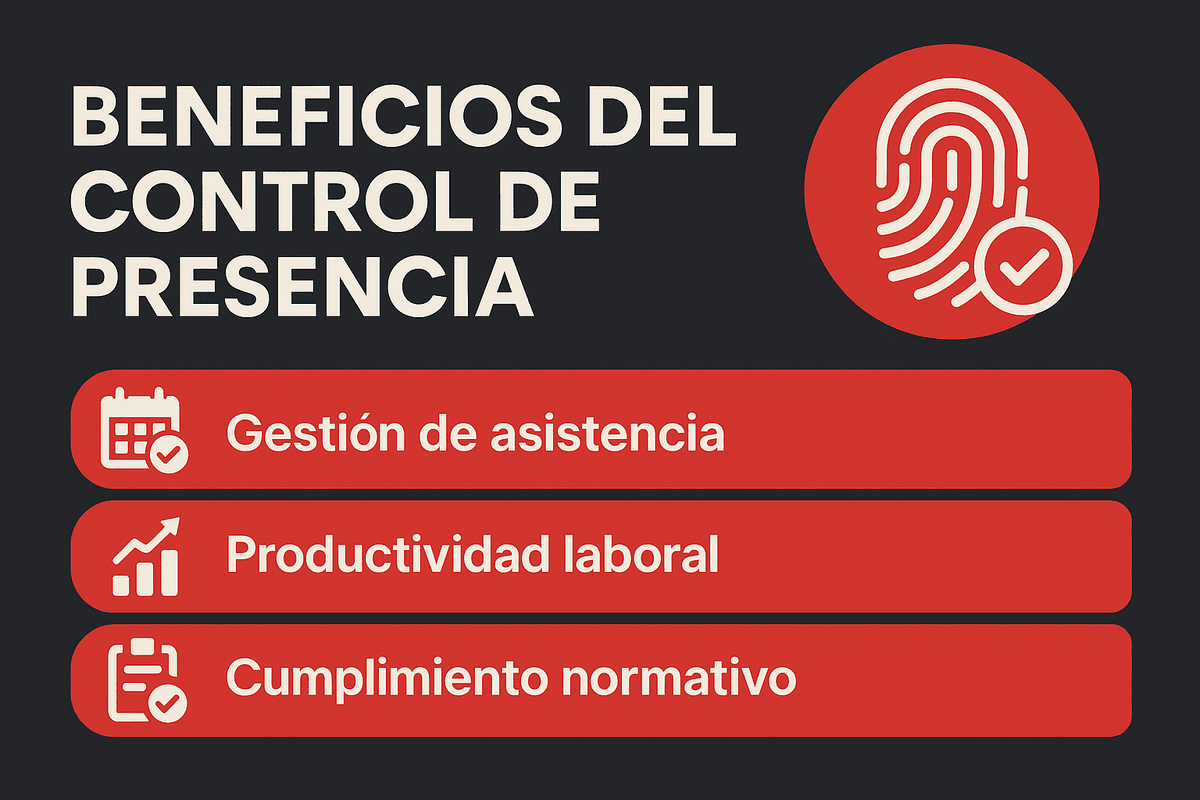
Frequently asked questions about the benefits of attendance control for companies
Below, we answer some of the most common questions that arise when considering the implementation of an attendance control system in the business environment. These frequently asked questions will help you better understand its usefulness, impact, and real benefits.
What companies need an attendance control system?
Any company that wants to improve the management of its staff’s time and productivity can benefit from an attendance control system. Size doesn’t matter: both small and medium-sized businesses and large corporations, as well as sports centers and gyms, find in this type of tools a solution to control schedules, reduce unjustified absences, and optimize their human resources.
Does attendance control help comply with labor legislation?
Yes, one of the main benefits of attendance control for companies is ensuring regulatory compliance in labor matters. In many countries, the law requires recording employees’ working hours. A digitized system facilitates this registration, avoids penalties, and provides evidence in case of audits or legal disputes.
What immediate benefits does implementing an attendance control system offer?
The immediate benefits include greater punctuality, reduction of absenteeism, control of overtime, and improvement of the work environment thanks to transparency in management. In addition, by having automatic reports, administrative tasks are reduced and payroll management is streamlined.
Share
Related News




Fingerprint vs Facial Recognition vs Palm: Which Biometric…
The B2B buyer’s dilemma You have to implement an access control or…
Go to Post

How does time tracking with geolocation work?
How does time tracking with geolocation work? Time tracking with geolocation is…
Go to Post
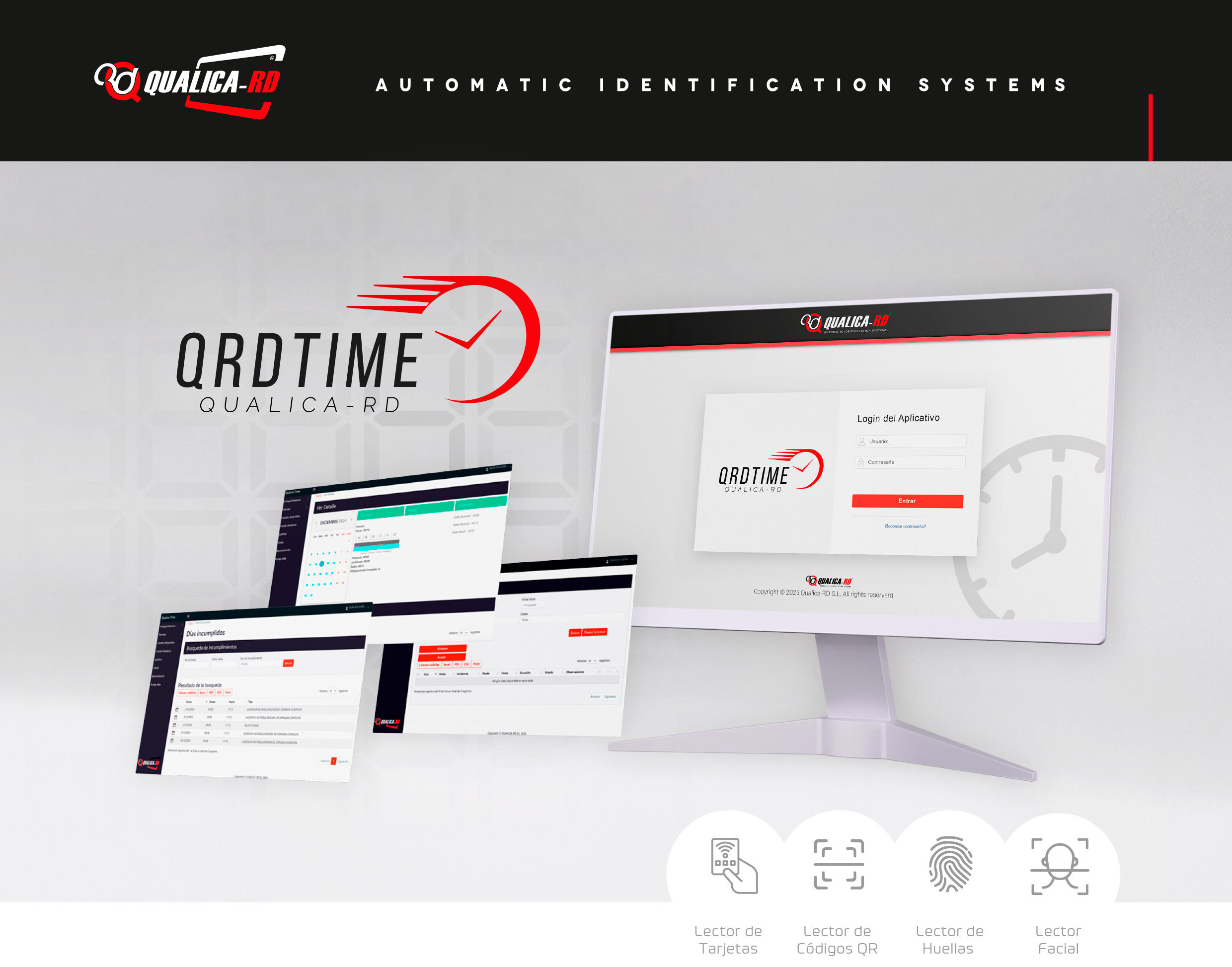
New QRDTIME Clock-In Software
In 2025, all companies in Spain will be required to implement a…
Go to Post