
Business Hours: Monday to Thursday: 7:00 AM – 3:00 PM (Support until 5:00 PM) | Friday: 7:00 AM – 3:00 PM (Support until 2:30 PM)
(+34) 957 326 107
Business Hours: Monday to Thursday: 7:00 AM – 3:00 PM (Support until 5:00 PM) | Friday: 7:00 AM – 3:00 PM (Support until 2:30 PM)
Copyright © 2025 Qualicard. All Rights Reserved.


Technical Support
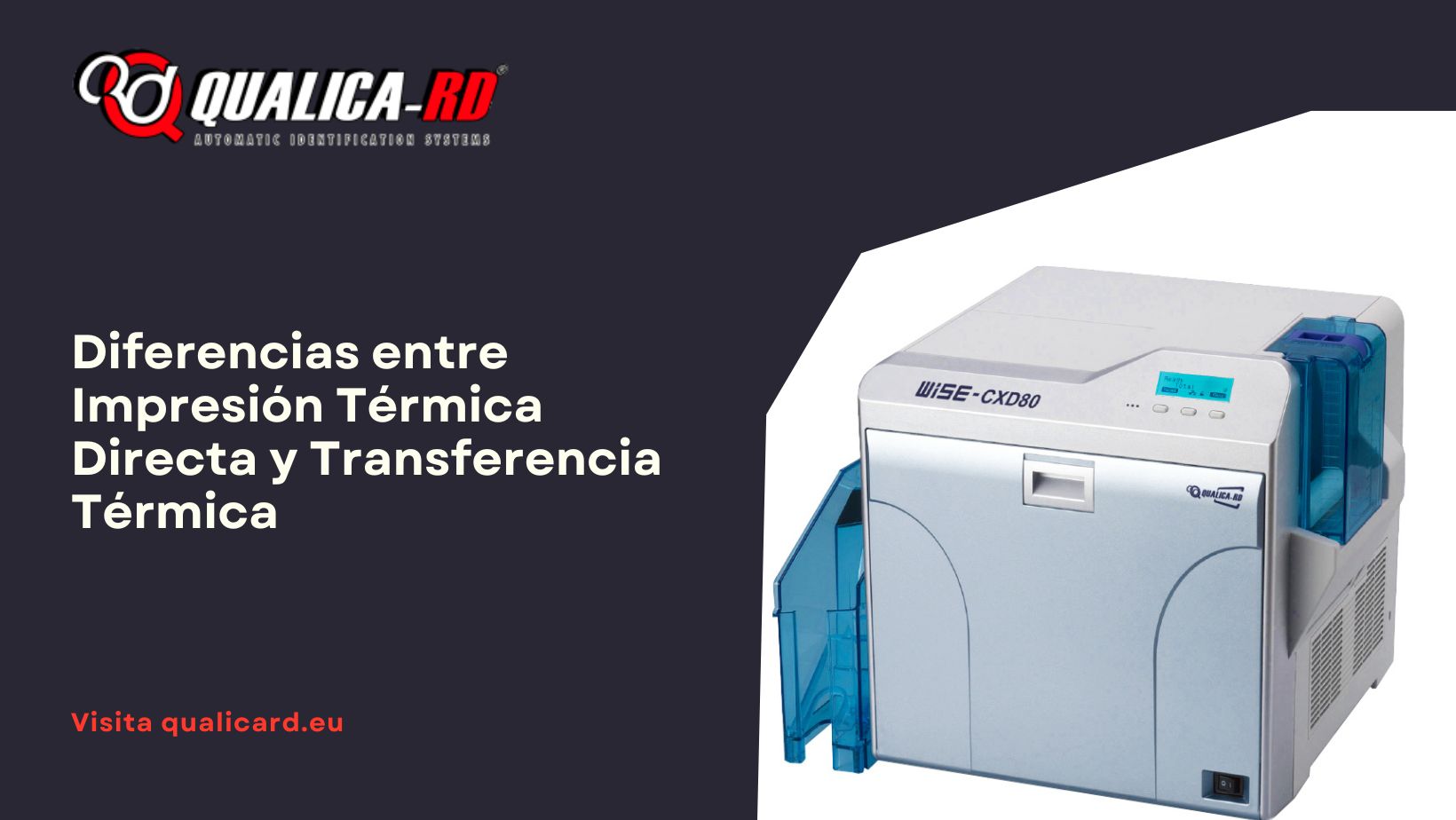
Differences between Direct Thermal Printing and Thermal Transfer
May 12, 2024
Differences between Direct Thermal Printing and Thermal Transfer: Discover the unique characteristics of each thermal printing technology and learn about the advantages and disadvantages they offer. In this article, we will explore the fundamental differences between direct thermal printing and thermal transfer, as well as their application in various scenarios. Join us on this journey of technological knowledge!
Introduction to thermal printing
Thermal printing is a technology widely used in various sectors, from the food industry to healthcare. It is crucial to understand the differences between the two main methods of thermal printing: direct thermal printing and thermal transfer.
Direct thermal printing is characterized by printing directly onto thermal paper through the heating of thermal heads. On the other hand, thermal transfer uses a transfer ribbon to transfer ink onto the paper, resulting in greater durability of the print.
Understanding the advantages and disadvantages of each technique is essential for choosing the most suitable one according to the specific needs of each application. From print quality to cost per label, every aspect must be carefully considered when selecting the most appropriate thermal printing method.
What is direct thermal printing?
Direct thermal printing is a technique that uses heat-sensitive thermal paper to produce images and text without the need for ink.
In this process, the thermal heads apply heat directly to the paper, causing the selected areas to darken, creating the desired image.
One of the key advantages of direct thermal printing is its simplicity and speed, as it does not require consumables such as ink cartridges or transfer ribbons.
However, it is important to note that direct thermal prints tend to be less durable than those produced by thermal transfer, which can limit their use in certain applications.
Advantages of direct thermal printing
The advantages of direct thermal printing are significant in various environments. One of the main advantages is the simplicity of the process, as it does not require the use of ink cartridges or transfer ribbons.
Moreover, direct thermal printing produces high-quality and sharp prints, ideal for labels and receipts that require a clear and professional presentation.
Another point to highlight is the printing speed, as this method is fast and efficient, resulting in greater productivity in high-volume printing environments.
Moreover, direct thermal printing is a more cost-effective long-term option, as it eliminates the need to maintain inventories of consumables such as ink cartridges, which can reduce operating costs.
Disadvantages of direct thermal printing
The disadvantages of direct thermal printing must also be considered when choosing this method. One of the main disadvantages is the limited durability of direct thermal prints, as exposure to light, heat, or chemicals can cause fading or deterioration.
Moreover, direct thermal printing is usually more expensive per unit compared to thermal transfer and depending on the type of PVC card printer you use, due to the need to use specialized thermal paper that can have a higher price.
Another important disadvantage is that direct thermal prints can be susceptible to smudging or loss of print quality if exposed to high temperatures or friction, which can affect the readability and appearance of printed documents.
Finally, the lack of water and humidity resistance in direct thermal prints can limit their use in environments where durability and waterproofing are essential.
What is thermal transfer?
Thermal transfer is a printing method that uses a transfer ribbon to apply ink onto paper. In this process, the thermal head heats the ribbon, causing the ink to transfer to the paper, creating a durable image that is resistant to water and fading.
One of the highlighted advantages of thermal transfer is the superior quality of prints compared to direct thermal printing. Due to the ink transfer, the prints are sharper and more detailed, ideal for applications that require high precision.
Moreover, thermal transfer is suitable for a wide range of materials, including paper, synthetic labels, and packaging materials, making it versatile and adaptable to different printing needs.
It is important to note that while thermal transfer offers high-quality and durable prints, the process may be slower and require higher operational costs due to the use of consumables such as transfer ribbons.
Advantages of Thermal Transfer
The advantages of thermal transfer make this printing method widely preferred in many applications. One of the main advantages is the high durability of the prints, as the transferred ink adheres more solidly to the paper, making them resistant to water, fading, and wear.
In addition, thermal transfer allows printing on a wide variety of materials, including synthetic labels, plastic films, and water-resistant materials, making it ideal for labeling and packaging requirements that need durability and resistance.
Another significant advantage of thermal transfer is the versatility in print quality, as it can produce high-resolution images and vibrant colors, making it an excellent choice for applications that require an attractive visual presentation.
Finally, thermal transfer is very efficient for large batch printing, making it perfect for high-volume production environments where speed and quality are essential.
Disadvantages of thermal transfer
The disadvantages of thermal transfer must also be considered when choosing this printing method. One of the main disadvantages is the associated cost, as the continuous use of transfer ribbons can increase operating expenses compared to direct thermal printing that does not require additional consumables.
Moreover, thermal transfer may have limitations in terms of printing speed, especially compared to direct thermal printing. This can be an important factor in production environments that require high printing speeds to maintain efficiency.
Another disadvantage to consider is the possibility of fading of the transferred prints over time, especially when exposed to adverse conditions such as intense sunlight. This can affect the quality and readability of the prints over time.
Finally, thermal transfer may be less suitable for applications that require a large number of color prints, as the color transfer process can result in higher costs and complexity compared to black and white printing.
Comparison of thermal printing technologies
When comparing thermal printing technologies, it is important to analyze both the advantages and disadvantages of direct thermal printing and thermal transfer. Direct thermal printing stands out for its simplicity and printing speed, making it ideal for applications that require quickness and efficiency in the production of labels or receipts. On the other hand, thermal transfer offers greater durability in prints, being more suitable for environments where water resistance and fading are crucial.
When it comes to print quality, thermal transfer typically provides superior results in terms of sharpness and detail, especially in color images. However, direct thermal printing may have limitations in the durability of prints, which can affect its use in certain applications.
Moreover, the choice between both technologies may also depend on long-term operational costs, considering the necessary consumables and required maintenance. It is important to evaluate the specific needs of each project to determine which of the thermal printing technologies best meets the requirements for quality, durability, speed, and costs.
Applications of direct thermal printing
Direct thermal printing finds numerous applications across various sectors due to its simplicity and efficiency. In the retail sector, it is widely used to print receipts and price tags at points of sale, streamlining transactions and providing clear information to the customer.
In the logistics and warehousing sector, direct thermal printing is used to print shipping labels and barcodes in real time, facilitating inventory management and the efficient distribution of products.
In the healthcare industry, this technology is used to print patient identification labels, medical information wristbands, and medication labels, ensuring proper identification and tracking of treatments.
Moreover, in hospitality and gastronomy environments, direct thermal printing is used to print orders in restaurant kitchens, avoiding errors and streamlining the service of food and beverages.
Conclusion
In summary, when exploring the differences between direct thermal printing and thermal transfer, it is crucial to consider the advantages and disadvantages of each technology to determine which best fits the specific needs of each project. Direct thermal printing stands out for its simplicity and speed, making it ideal for applications that require agile and efficient production, such as in the retail and logistics sectors.
On the other hand, thermal transfer offers greater durability in prints, being preferred in environments where water resistance and colorfastness are essential, such as in the food and healthcare industries. When comparing thermal printing technologies, it is important to assess print quality, material versatility, and efficiency based on the requirements of each application.
In direct thermal printing applications, its use in sectors such as retail, logistics, healthcare, and hospitality stands out, demonstrating its versatility and convenience in different contexts. Ultimately, the choice between direct thermal printing and thermal transfer will depend on specific considerations such as the required quality, desired durability, and operational costs, thus ensuring the selection of the most suitable technology for each situation.
Share
Related News


What is a retransfer printer and when to…
En el mundo de las impresoras de tarjetas PVC diseñadas para personalizar credenciales,…
Go to Post

Guide to printing credentials for events
Guía completa para imprimir acreditaciones para eventos En esta guía para imprimir…
Go to Post
How to keep your card printer in good…
Cómo mantener tu impresora de tarjetas en buen estado El buen funcionamiento…
Go to Post