
Business Hours: Monday to Thursday: 7:00 AM – 3:00 PM (Support until 5:00 PM) | Friday: 7:00 AM – 3:00 PM (Support until 2:30 PM)
(+34) 957 326 107
Business Hours: Monday to Thursday: 7:00 AM – 3:00 PM (Support until 5:00 PM) | Friday: 7:00 AM – 3:00 PM (Support until 2:30 PM)
Copyright © 2025 Qualicard. All Rights Reserved.


Technical Support
What is an access control system and how does it work?
May 1, 2025
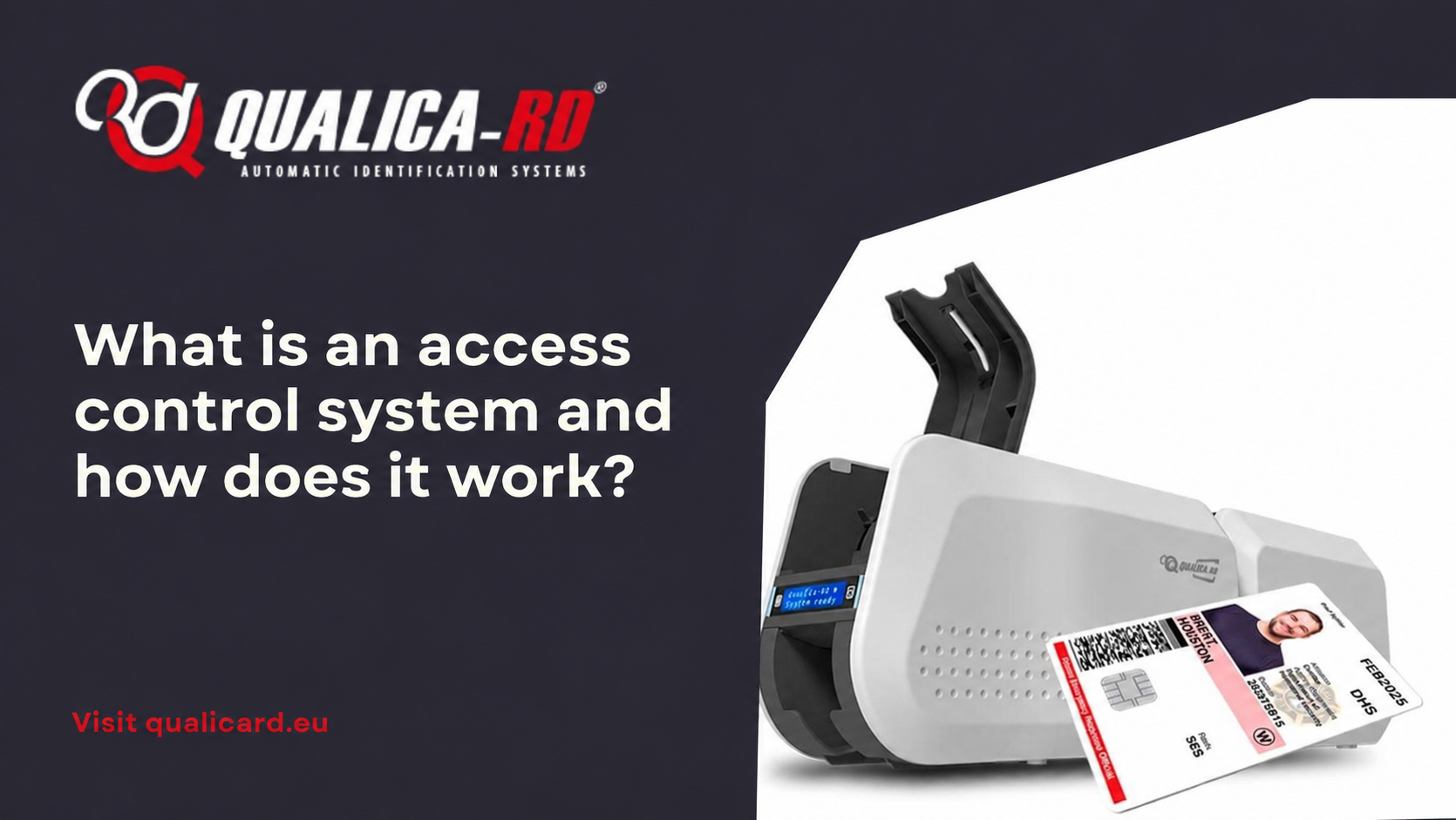
Access control systems are a set of devices and software that allow managing, restricting, and supervising the entry or exit of people and vehicles in physical or digital areas. These systems are widely used in companies, government institutions, hospitals, residential buildings, and many other facilities that require high levels of security.
How does an access control system work?
The operation of access control systems is based on the identification, authentication, and authorization of users. When entering a restricted area, the user presents their credential or identifier (it can be an RFID card, a fingerprint, or a PIN code), the system validates that information and, if correct, authorizes access.
This process is carried out thanks to the integration of several elements:
- Credentials: cards, biometrics, or mobile devices.
- Readers: devices that read credentials, such as biometric readers or card readers.
- Controllers: devices that connect the reader to the central system.
- Access control software: platform that manages permissions, logs events, and enables remote administration.
- Physical locking devices: such as access turnstiles, electric doors, magnetic locks, among others.
Types of access control
There are several types of access control, classified according to the security level, authentication method, and environment in which they are used. Below are the most common ones:
1. Physical access control
Restricts access to physical areas, such as buildings, offices, warehouses, or industrial facilities. It uses turnstiles, electronic locks, and biometric readers.
2. Logical access control
Refers to access to digital resources, such as networks, computer systems, or databases. It is managed through users, passwords, two-factor authentication (2FA), and specialized software.
3. Role-based access control (RBAC)
Assigns permissions based on the user’s role within an organization, thereby limiting access to what is strictly necessary.
4. Biometric access control
Uses unique physical characteristics of the individual, such as fingerprints, facial recognition, or iris scanning. It is one of the most secure and difficult methods to breach.
5. RFID card access control
It uses RFID cards that communicate with readers via radio frequency. They are very common in companies and corporate buildings.
Components of an access control system
To understand how access control systems work, it is key to know their main components:
- Credential readers: can be proximity, biometric, or mobile.
- Controllers: receive the signal from the reader and communicate with the central system.
- Access control software: manages permissions, users, and logs all activities.
- Access turnstiles: physical barriers that regulate entry/exit.
- Alarms and sensors: to detect forced access or unauthorized attempts.
Advantages of implementing an access control system
The benefits of installing access control systems in an organization are numerous. The main ones include:
- Improved security: only authorized people can enter sensitive areas.
- Activity logging: allows auditing who enters and exits, and when.
- Reduction of internal risks: limits employee access according to their functions.
- Automation and remote control: thanks to the access control software, everything can be managed from a centralized platform.
- Compatibility with other systems: such as video surveillance, alarms, or fire detection.
Comparison: advantages of using access control systems
| Advantage | Without access control | With access control |
|---|---|---|
| Security | Low. Access without registration or verification. | High. Authorized and monitored access. |
| Entry management | Manual. Prone to errors. | Automatic. Precision and total control. |
| Audit | Not available. | Complete event history. |
| Technological integration | Limited. | Compatible with advanced systems. |
| Accessibility | Generalized. Risk of intrusion. | Personalized. Access according to permissions. |
Practical applications of access control systems
These systems are widely used in contexts such as:
- Companies: to protect offices, servers, and restricted areas.
- Hospitals: to control access to operating rooms, laboratories, or medication storage.
- Schools and universities: to regulate the entry of students and staff.
- Homes and condominiums: increasing the security of residents.
- Events and stadiums: through access turnstiles and electronic tickets.
Current trends in access control
With the evolution of technology, access control systems have incorporated innovations such as:
- Smartphone control: through mobile apps.
- AI facial recognition: for greater accuracy and speed.
- Cloud-based access control: allows remote management without the need for local servers.
- Integration with IoT systems: optimizes environment automation.
Conclusion
In a world where security and operational efficiency are priorities, understanding what an access control system is and how it works is essential. These systems not only prevent intrusions but also optimize access management, improve traceability, and enable intelligent administration of physical and digital resources. Incorporating technologies such as biometric readers, RFID cards, and specialized software is a key strategic decision for any modern organization.
Frequently asked questions about what an access control system is and how it works
To resolve the most common doubts about the operation and usefulness of access control systems, we have compiled some frequently asked questions that will help better understand their importance in the field of modern security.
What types of technologies are used in access control systems?
Modern systems use various technologies such as RFID cards, biometric readers, numeric PINs, smartphone control, and even facial recognition. The combination of these technologies allows for more secure and personalized access.
Is it possible to manage an access control system remotely?
Yes, many current systems include cloud-based access control software, which allows administrators to manage permissions, monitor access, and generate reports from anywhere with an internet connection.
What advantages does an access control system offer over traditional methods?
Unlike traditional methods such as physical keys, these systems offer greater security, real-time activity logging, and the ability to customize access levels according to schedules, roles, or specific areas, which significantly reduces internal and external risks.
Share
Related News

Fingerprint vs Facial Recognition vs Palm: Which Biometric…
The B2B buyer’s dilemma You have to implement an access control or…
Go to Post
Biometric Access Control and GDPR: 2026 Regulatory Compliance…
Is it legal to use fingerprint or facial recognition to clock in…
Go to Post
Access barrier in access control systems
The access barrier in access control systems is one of the most…
Go to Post