
Business Hours: Monday to Thursday: 7:00 AM – 3:00 PM (Support until 5:00 PM) | Friday: 7:00 AM – 3:00 PM (Support until 2:30 PM)
(+34) 957 326 107
Business Hours: Monday to Thursday: 7:00 AM – 3:00 PM (Support until 5:00 PM) | Friday: 7:00 AM – 3:00 PM (Support until 2:30 PM)
Copyright © 2025 Qualicard. All Rights Reserved.


Technical Support
Access barrier in access control systems
February 15, 2026
The access barrier in access control systems is one of the most widely used physical elements to regulate the transit of vehicles and people in private, corporate, and institutional spaces. In a context where perimeter security and intelligent entry and exit management are priorities, this type of solution has become a key component within any modern Access control strategy.
Today, organizations seek integrated systems that combine technology, automation, and data analysis. Automatic barriers, combined with access control solutions, make it possible not only to restrict passage but also to record, audit, and optimize access management in real time.
What is an access barrier in access control systems?
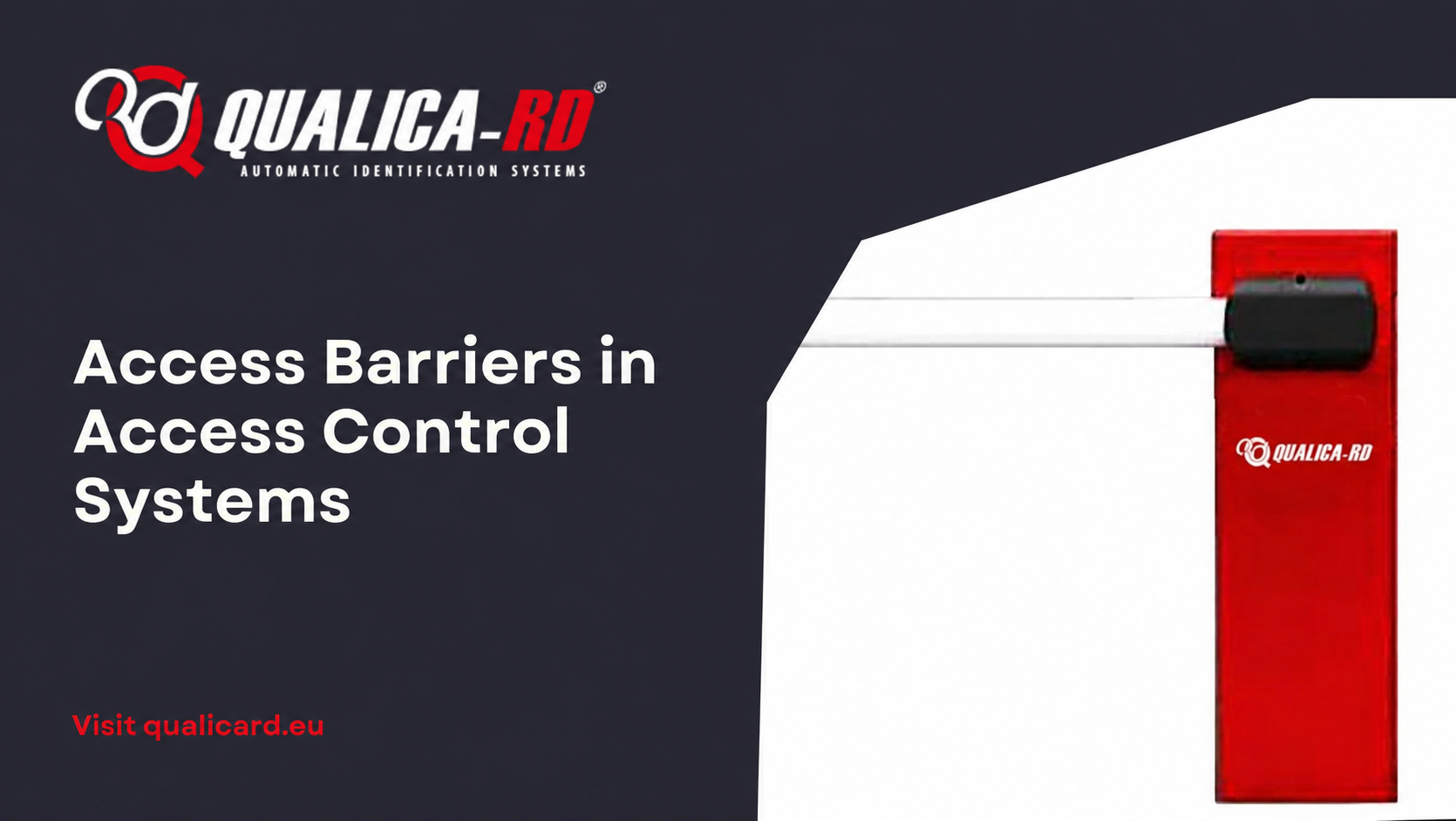
An access barrier in access control systems is a physical device designed to block or allow the passage of vehicles or people through an automated or manual mechanism. It usually consists of a folding or telescopic arm that raises or lowers after receiving an authorization signal.
These barriers integrate with technologies such as RFID card readers, license plate recognition (LPR), biometric systems, QR codes, remote controls, or mobile applications. Their main function is to act as a physical validation point within a broader Access control ecosystem, ensuring that only authorized users can enter.
How does an automated access barrier work?
The operation of an automatic barrier is based on credential verification. When a user identifies themselves via a card, registered license plate, or biometric system, the management software validates the information in the database and, if correct, sends the opening command.
In addition, modern systems allow the integration of presence sensors, safety photocells, and anti-collision systems that ensure safe and efficient use. This makes the access barrier an intelligent element within the global Access control system, improving both security and the user experience.
Most commonly used types of access barriers
There are different types of access barriers depending on the environment and the required level of security. The choice will depend on traffic flow, the type of installation, and the desired degree of automation.
Below are the most common models within modern access control systems:
Electromechanical automatic barriers
They are the most widely used in parking lots, residential communities, and businesses. They operate through an electric motor that drives the opening arm, offering a balance between performance and cost.
They stand out for their reliability, ease of installation, and compatibility with access control systems using cards, remote controls, or license plate readers.
High-security hydraulic barriers
Designed for environments with heavy traffic or maximum protection requirements, such as industrial facilities or critical infrastructure. Their hydraulic system offers greater resistance and durability.
They are ideal when an access barrier in access control systems with continuous use and high response capacity is required.
Barriers with license plate recognition (LPR)
They incorporate smart cameras that automatically read the vehicle’s license plate and validate its access in the database. They are a trend in corporate parking lots and logistics facilities.
This type of solution optimizes vehicle flow and eliminates the need for physical credentials, improving the efficiency of vehicular access control.
Comparative table of access barriers in access control systems
To facilitate the choice of the best solution, a comparative table with the main characteristics is shown below:
| Barrier Type | Security Level | Recommended Use | Main Advantages |
|---|---|---|---|
| Electromechanical | Medium | Parking lots and communities | Affordable cost, easy installation |
| Hydraulic | High | Industry and critical infrastructure | High resistance and intensive use |
| With LPR | High | Businesses and logistics | Full automation and speed |
This analysis helps understand which type of access barrier in access control systems best suits the operational needs and risk level of the environment.
What do access barriers contribute to access control systems?
Barriers provide multiple strategic benefits within a comprehensive access control system. First, they provide a visible physical restriction that acts as a deterrent against unauthorized access.
In addition, they allow automating processes, recording entry and exit data, reducing operational costs, and improving traceability. This translates into greater control, regulatory compliance, and resource optimization in any organization.
1. Reinforced perimeter security
By combining a physical barrier with digital validation systems, a double layer of security is created. This minimizes risks of intrusion and unauthorized access.
It also facilitates integration with video surveillance cameras, alarms, and centralized management software.
2. Real-time control and traceability
Modern systems allow generating detailed reports on accesses, schedules, and frequency of use. This is key for audits and internal control.
The digitalization of access control improves data-driven decision-making and optimizes facility management.
3. Automation and operational efficiency
Barriers reduce the need for permanent surveillance staff at vehicular access points.
Automation reduces waiting times and improves the user experience, especially in corporate or residential environments.
Tips for choosing the best access barrier
Selecting the right access barrier in access control systems requires analyzing multiple technical and operational factors. Not all solutions offer the same performance.
These tips can help make a strategic decision:
- Analyze traffic volume: Determine whether usage will be intensive or moderate.
- Evaluate the required security level: A residential parking lot is not the same as an industrial facility.
- Verify technological compatibility: Ensure integration with the existing access control system.
- Consider maintenance and durability: Choose equipment with technical support and warranty.
- Opt for scalable solutions: That allow future expansions or integrations.
Taking these aspects into account guarantees an efficient and sustainable investment in the long term.
Current trends in access barriers and access control
The market is evolving toward smart solutions based on IoT, artificial intelligence, and cloud management. The access barrier in access control systems is no longer just a mechanical element, but part of an advanced technological infrastructure.
Among the most notable trends are contactless access, integration with mobile apps, advanced biometrics, facial recognition, and remote management systems. These innovations improve security, reduce health risks, and optimize the user experience.
The strategic importance of the access barrier
The access barrier in access control systems is an essential component for any organization that wishes to protect its facilities and efficiently manage the transit of vehicles and people. Its integration with modern technologies makes it possible to raise the level of security and operational efficiency.
Investing in a professional access control solution not only improves physical protection, but also strengthens corporate image, conveys trust, and ensures regulatory compliance. In an increasingly digitalized environment, having automated and scalable systems becomes a key strategic decision.
Frequently asked questions about the access barrier in access control systems
Below, we answer some of the most common questions related to the access barrier in access control systems. These questions help to better understand its operation, applications, and benefits within a comprehensive professional access control strategy.
What is the main function of an access barrier in access control systems?
The main function of an access barrier in access control systems is to regulate and restrict the passage of vehicles or people through a prior validation system. It acts as a physical deterrent element and as a verification point connected to software that authorizes or denies entry.
In addition to preventing unauthorized access, it allows registering entries and exits, improving traceability, and reinforcing perimeter security in residential, corporate, and industrial environments.
What technologies can be integrated with an access barrier?
A modern access barrier can be integrated with multiple technologies such as RFID readers, proximity cards, QR codes, license plate recognition (LPR), biometrics, or mobile applications. This integration turns the barrier into an intelligent component within the overall Access Control system.
Thanks to these technologies, it is possible to automate processes, reduce waiting times, and manage access remotely, which increases operational efficiency and the security level.
What maintenance does an automated access barrier require?
The maintenance of an access barrier in access control systems depends on the type of mechanism (electromechanical or hydraulic) and the intensity of use. Generally, it is recommended to perform periodic preventive inspections to ensure proper operation and extend its service life.
These inspections usually include checking the motor, safety systems, sensors, photocells, and electronic components. Proper maintenance reduces breakdowns, prevents service interruptions, and ensures optimal long-term performance.
Share
Related News


Fingerprint vs Facial Recognition vs Palm: Which Biometric…
The B2B buyer’s dilemma You have to implement an access control or…
Go to Post
Biometric Access Control and GDPR: 2026 Regulatory Compliance…
Is it legal to use fingerprint or facial recognition to clock in…
Go to Post

What is an access control software
In an increasingly digitized business environment, physical and logical security has become…
Go to Post