Business Hours: Monday to Thursday: 7:00 AM – 3:00 PM (Support until 5:00 PM) | Friday: 7:00 AM – 3:00 PM (Support until 2:30 PM)
(+34) 957 326 107
Business Hours: Monday to Thursday: 7:00 AM – 3:00 PM (Support until 5:00 PM) | Friday: 7:00 AM – 3:00 PM (Support until 2:30 PM)
Copyright © 2025 Qualicard. All Rights Reserved.


Technical Support
What is a Ribbon and Types of Ribbon?
May 1, 2024
What is a Ribbon and Types of Ribbon? is a fundamental topic in the access control sector. In this article, we will explore the definition of Ribbon, the different types available for printing in the market, and their various uses. Join us on this fascinating journey through the world of Ribbons!
Definition of Ribbon
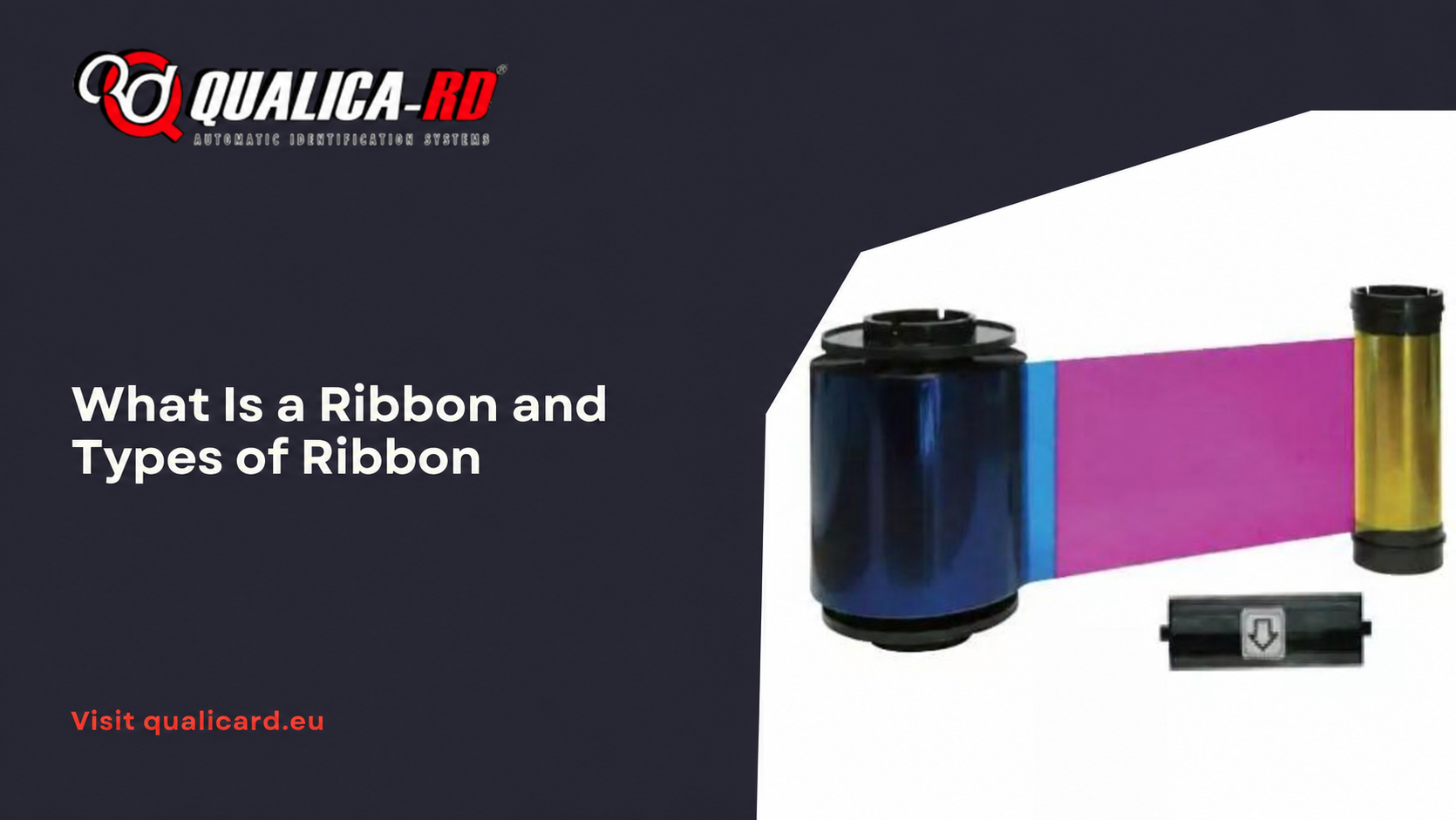
Ribbon is a term widely used in the printing industry, especially in the field of identification and coding. It is a tape made of special material used to transfer ink in PVC Card Printers that are thermal or thermal transfer. The print quality with Ribbon is crucial for achieving clear and durable results on adhesive labels and other materials.
There are various types of Ribbon depending on the material they are made of. Some of the most common are wax Ribbon, resin Ribbon, and wax-resin Ribbon. Each type of Ribbon offers unique advantages and disadvantages, so it is important to choose the most suitable one according to the required printing and durability needs.
The Ribbon plays a fundamental role in the quality and durability of prints, especially in applications that require labels resistant to various environmental conditions. Additionally, the compatibility of the Ribbon with the printer used is a key factor to consider when selecting the appropriate type. In this regard, it is essential to be well acquainted with the specifications of the Ribbons available on the market to ensure optimal results.
Types of Ribbon for printing
The types of Ribbon for printing are varied and adapt to different needs and quality demands. Among the most common types are the wax Ribbon, ideal for standard paper label prints. On the other hand, the resin Ribbon is perfect for labels that require resistance to moisture and abrasion, providing durable and high-quality prints.
For those cases where both wax and resin characteristics are needed, the wax and resin Ribbon combines the best of both worlds. This type of Ribbon is versatile and offers excellent durability, making it a popular choice for applications that require labels to last in adverse conditions.
It is important to understand the specifics of each type of Ribbon to ensure an accurate selection and optimal printing results. The choice of the right type of Ribbon will directly impact the durability and quality of the prints, so it is essential to consider the specific needs of each project before making a decision.
Wax Ribbon
The Wax Ribbon is a popular option for label printing where extreme durability is not a primary requirement. This type of Ribbon is ideal for printing on standard paper labels and offers excellent value for money. Prints with Wax Ribbon usually have good quality in terms of sharpness and contrast, making it a common choice for office and retail applications.
Despite not being as durable as other types of Ribbon, such as resin, wax Ribbon is perfectly suitable for labels that will not be exposed to severe environmental conditions. Its ease of use and compatibility with a wide range of printers make it a convenient choice for many businesses.
If you are looking for an economical and reasonably high-quality printing solution for your labels, wax Ribbon may be the perfect option for your needs. Its versatility and satisfactory performance in numerous applications make it a solid choice for those companies looking to optimize their printing costs without sacrificing the quality of their labels.
Resin Ribbon
The Resin Ribbon is an excellent option for applications that require durable labels resistant to adverse conditions. This type of Ribbon is ideal for printing labels that will be exposed to moisture, high temperatures, or friction. Prints with Resin Ribbon offer superior quality in terms of durability and resistance, making it a common choice in industrial and laboratory environments where the legibility and permanence of information are essential.
The main advantage of the resin ribbon is its ability to print on a variety of materials, including synthetic labels and films, while maintaining high print quality and clarity. Although it is slightly more expensive than the wax ribbon, its durability and resistance to external factors make it a valuable long-term investment.
When choosing the resin ribbon, it is important to consider the specific needs of the printing project. Its ability to provide high-quality and durable prints makes it an excellent choice for applications that require labels to remain legible and intact for long periods of time. Its compatibility with a wide range of printers makes it versatile and suitable for various industries and commercial uses.
Wax and resin ribbon
The wax and resin ribbon combines the best of both worlds by offering both the versatility of wax and the durability of resin in a single product. This type of ribbon is ideal for applications that require both resistance to friction and moisture, as well as high print quality. The combination of wax and resin allows for clear and durable prints on a variety of materials, including paper, synthetic labels, and films.
The advantage of using wax and resin ribbon lies in its ability to adapt to different printing needs, providing high-quality and durable results. Its versatility makes it a popular choice among companies looking for a ribbon that can meet various printing requirements. Additionally, its compatibility with a wide range of printers makes it convenient and easy to integrate into diverse work environments.
When choosing the wax and resin ribbon, it is important to consider the specifications of each product and ensure they meet the printing needs of the project in question. Its ability to deliver high-quality results across a wide variety of materials makes it an attractive option for companies looking for a versatile and efficient ribbon for their printing operations.
Comparison of Wax and Resin Ribbon
When it comes to choosing between the wax ribbon and the resin ribbon, it is important to consider the key differences between both types. The wax ribbon is ideal for printing on standard paper labels and offers good value for money, while the resin ribbon is preferred for applications that require durable labels resistant to adverse conditions. In terms of durability, the resin ribbon outperforms the wax ribbon, as resin prints are more resistant to moisture, high temperatures, and friction.
Another aspect to consider when comparing these two types of Ribbon is the print quality. While the wax Ribbon provides clear and sharp prints on standard labels, the resin Ribbon offers superior quality, especially on synthetic materials and films. The choice between wax and resin Ribbon will depend on the specific needs of each printing project, taking into account factors such as the required durability, the environmental conditions in which the labels will be used, and the type of materials to be printed.
In summary, the comparison between wax ribbon and resin ribbon focuses on durability and print quality. While wax ribbon is an economical option suitable for standard prints, resin ribbon is the preferred choice for applications that require durable and high-quality labels. Carefully evaluating the printing needs and characteristics of each type of ribbon will allow for selecting the most suitable one for each project, ensuring optimal results in terms of durability and readability.
Uses of Ribbons
Ribbons have a wide variety of uses in the printing sector and across different industries. One of the most common uses of ribbons is in label printing for products in sectors such as retail and logistics. Ribbons ensure the durability of labels and the quality of the print, which is essential for the accurate identification of products and inventory tracking.
Another important use of Ribbons is in the printing of labels for the healthcare sector, especially in hospitals and laboratories. Ribbons allow for the printing of labels with barcodes and other vital information for tracking and managing medical samples and patient histories. The durability and print quality of Ribbons are key in environments where precision and traceability are critical.
Furthermore, Ribbons are used in the manufacturing industry to print product identification labels and barcodes on packaging and finished product labels. The ability of Ribbons to adapt to different label materials and provide sharp and durable prints makes them indispensable for ensuring efficiency and accuracy in manufacturing and distribution processes.
Share
Related News
-
-
 Types of barcodes 24 Apr
 -
 What is PDA in Spain? 05 Apr
How to choose an industrial ruggedized terminal: 2026…
An industrial ruggedized terminal is not a “reinforced” mobile phone: it is…
Go to Post
Types of barcodes
Types of barcodes: a complete guide to understanding their uses and characteristics…
Go to Post