
Business Hours: Monday to Thursday: 7:00 AM – 3:00 PM (Support until 5:00 PM) | Friday: 7:00 AM – 3:00 PM (Support until 2:30 PM)
(+34) 957 326 107
Business Hours: Monday to Thursday: 7:00 AM – 3:00 PM (Support until 5:00 PM) | Friday: 7:00 AM – 3:00 PM (Support until 2:30 PM)
Copyright © 2025 Qualicard. All Rights Reserved.


Technical Support
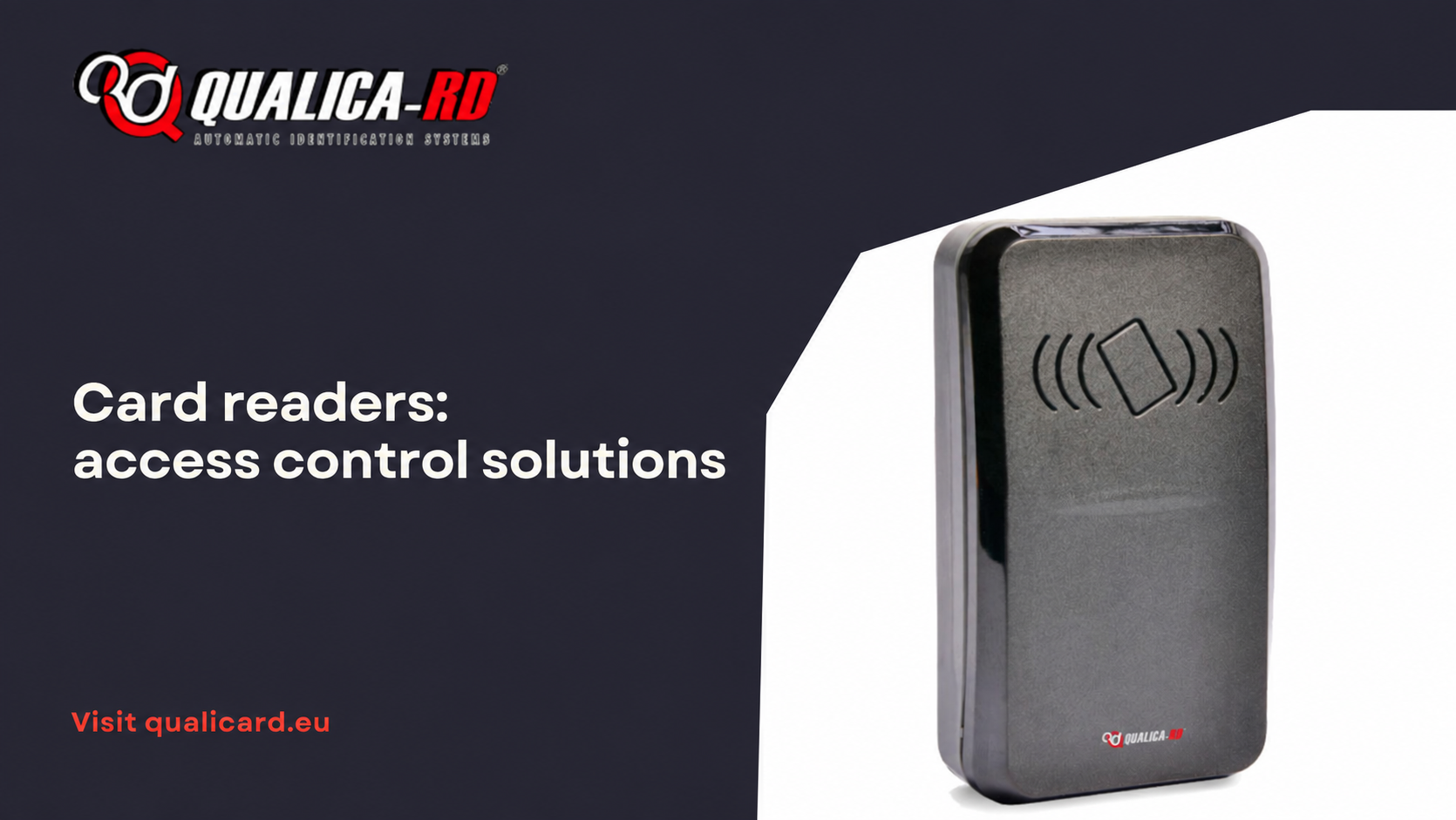
Card reader: Solutions for access control
November 10, 2024
Card reader
In today’s world, security and access control are fundamental for any organization. A card reader becomes an indispensable tool for managing who enters and leaves our facilities. In this article, we will explore in depth what a card reader is, its different types, its advantages, and the multiple applications it has in the field of access control. Get ready to discover how this technology can optimize security in your company.
What is a card reader?
A card reader is a device designed to read information stored on magnetic, RFID, or proximity cards. Its main objective is to facilitate access to different areas within an organization, granting specific permissions to users who present the appropriate cards. This technology not only optimizes security, but also allows keeping a detailed record of entries and exits, which is useful for various applications in companies.
The operation of these devices is quite simple. When bringing the card close to the reader, it uses different scanning methods to extract the corresponding information. For example, magnetic card readers read the magnetic stripe, while RFID readers use radio waves to capture data without the need for direct contact. Thanks to this operation, readers have found a prominent place in the field of access control in corporate buildings, educational institutions, and large-scale events.
Integrating a card reader into a security system offers multiple benefits. Not only is access management improved, but the risk of unauthorized intrusions is also minimized. Many models allow configuring different access levels according to the organization’s needs, thus offering a flexible and adaptable solution. This means that restrictions can be established for sensitive areas, ensuring that only authorized personnel can enter.
In today’s digital era, these devices are not just an option, but a necessity for any facility seeking to maintain a secure environment. Implementing a card reader represents a step toward modernizing security systems, aligning with current automation and control trends. With technological advancement, the precision and speed of identifying people have become more effective, guaranteeing a positive impact on security management.
Types of card readers
One of the most common types of readers is the one that uses magnetic cards. These devices work through a magnetic stripe that stores information on three tracks. When the card is swiped through the reader, the information is read, allowing access to certain areas. The simplicity of their use and their relatively low cost make them a popular option for many companies, although their durability can be a factor to consider, since the magnetic stripe can wear out over time.
Another alternative that has gained popularity is RFID readers (Radio Frequency Identification). This type of device uses radio waves to communicate with cards or tags that can be at a short distance, providing greater convenience by eliminating the need for physical contact. RFID technology offers an advanced level of security, since it is difficult to duplicate and allows faster scanning. The variety in types of RFID tags also allows their use in different applications, from inventory control to attendance systems at events.
In the realm of proximity, proximity card readers offer an ideal solution for fast access. These devices detect the card signal when it is at a short distance, facilitating smooth and agile entry. They are generally used in corporate and high-security environments, since they allow frictionless access control, minimizing queues and improving the user experience. The versatility of this technology allows its integration into various security systems, providing effective options for contemporary needs.
Biometric readers, although not card readers in the traditional sense, are also part of the access control ecosystem. By using unique physical characteristics of each individual, such as fingerprints or facial recognition, they offer an exceptional level of security. Their use has been increasing in contexts where it is critical to ensure accurate identification of people. This fusion of technologies demonstrates how innovation is transforming the field of access control.
Magnetic card reader
Magnetic card readers are reliable devices widely used in various access control applications. They work by reading the information stored on the magnetic stripe of a card, which can contain data such as usernames, IDs, and access permissions. This card format has been popular for decades due to its simplicity and ease of implementation, making magnetic readers a common option in business and commercial environments.
Despite their effectiveness, these readers have some limitations. The durability of magnetic cards can be affected by wear and frequent use, which can result in misreads or access failures. Sometimes, even contact with magnets or household appliance sources can demagnetize a card. However, for many businesses, these issues are not significant, since cards can be easily replicated and the replacement cost is usually low.
The installation of a magnetic card reader is relatively simple and does not require complex technologies. By connecting the device to a centralized system, access can be managed in real time and a record of all transactions can be kept. This allows companies to monitor and control the entries and exits of staff and visitors, improving security and facility management. The records obtained can be crucial for audits and access reviews at any time. In addition to their use in access control, magnetic card readers also find applications in payment systems, time and attendance management. This type of versatility has contributed to their popularity in shops and offices, where efficient management of access and information is essential. In a world where security is a priority, magnetic readers remain a practical and effective solution for managing the movement of people in various facilities.RFID card reader
RFID (Radio Frequency Identification) technology has revolutionized the way access is managed in various environments. An RFID card reader uses radio waves to identify and communicate with cards or tags that, unlike magnetic ones, do not require physical contact to be read. This feature provides a smoother user experience, eliminating queues and reducing waiting time at facility entrances. One of the main advantages of RFID systems lies in their high security. RFID cards are difficult to replicate, making them a more robust option against fraud. By using radio frequencies, readers can capture signals from multiple cards at once, facilitating access control at mass events or places with high foot traffic. This ease of managing multiple simultaneous accesses makes RFID technology ideal for a variety of applications, from educational institutions to large corporations.In terms of installation and configuration, these readers are usually compatible with existing access management systems, which simplifies their implementation. The data collected can be stored and analyzed, offering administrators valuable information about people traffic and user behavior. This type of analysis can help optimize the use of facilities and improve security strategies, adapting them to the specific needs of each organization.
The versatility of RFID is not limited to access control. It is also used in inventory management, equipment monitoring, and asset tracking. Real-time identification capability provides companies with a significant competitive advantage by enabling more efficient management of their resources. By integrating advanced technologies such as RFID readers into their operations, organizations can achieve new levels of efficiency and security in their daily management.
Proximity card reader
Proximity card readers have become a very popular solution for access control in a variety of environments. This type of device allows quick and secure identification of users through cards or key fobs that emit a signal at short range. When the card is brought close to the reader, it recognizes the signal and grants access to the user, simplifying the process and improving the overall experience compared to traditional systems that require physical contact.
A notable aspect of this technology is its ability to maintain high operational security. Proximity cards are often difficult to duplicate, providing an additional layer of protection against unauthorized access. Integrating this type of reader into security systems is especially advantageous in facilities that require strict control, such as government buildings, military installations, and areas where sensitive data is handled.
The installation of a proximity card reader tends to be simple and can adapt to various infrastructures. With the possibility of centralizing access management, organizations can keep a detailed record of who enters and exits, facilitating audits and real-time data review. This is essential not only to improve security, but also to optimize logistics and the use of space within facilities.
The use of this technology extends beyond physical access. Many companies employ proximity card readers for time and attendance control systems, ensuring that the recording of hours worked is accurate and efficient. Due to their flexibility and effectiveness, these devices remain a favorable option for organizations seeking to improve their security and access management today.
Advantages of using a card reader
Implementing a card reader in an access control system offers multiple benefits that directly impact both security and operability. Efficiency is one of the main advantages, since these devices allow rapid identification, reducing queues and waiting times when entering facilities. Process automation makes it easier for employees and visitors to access without complications, thus improving the overall experience within the work environment.
Security is another outstanding feature when using these readers. By employing technologies such as RFID or proximity cards, an effective barrier against intrusions is provided by making access duplication considerably more difficult. This ensures that only authorized personnel can access restricted areas, thus protecting sensitive information and important assets. The ability to monitor and record every access attempt also allows organizations to maintain detailed real-time control of activities.
From an administrative perspective, control systems based on card readers simplify access management. Exact tracking of who accesses which areas and at what times can be maintained, which is invaluable for security audits and analysis. The data collected allows adjustments to access levels and optimization of space usage, ensuring that facilities are used efficiently.
The implementation cost tends to be reasonable compared to the benefits obtained. In the long term, card readers can help companies reduce expenses related to security and access management, becoming an investment that improves productivity and overall security. Implementing this technology is not only a response to current needs, but a step toward a more modern and dynamic environment.
Card reader applications in access control
The implementation of card readers in the field of access control has expanded to various industries, offering effective solutions for managing entries and exits. In offices, these devices are essential to ensure that only authorized personnel access sensitive areas, such as server rooms or executive offices. With a well-integrated system, organizations can keep a detailed record of who enters and leaves, facilitating security audits and regulatory compliance.
Likewise, the use of card readers is present in educational institutions, where access systems are generated that ensure the safety of students and staff. This type of technology makes it possible to monitor attendance and control access to restricted areas, such as laboratories or auditoriums, improving overall campus security management. The user experience is optimized by reducing the time required for the identification process, making the daily routine more agile.
Events and conferences also benefit from this technology, where the use of card readers facilitates attendee accessibility. Participants can quickly access different areas of the event, avoiding crowds at entry points and enabling a continuous flow. Furthermore, these systems can be connected to databases to validate attendance records and optimize tracking of attendee activity. Finally, the application of card readers extends to fleet management and time control in companies. Through these devices, organizations can monitor vehicle usage, record work hours, and optimize logistics. This type of information is invaluable for improving operational efficiency while ensuring a safe and controlled environment for all involved.Security improvement
Implementing a card reader system is an effective strategy to enhance security in any organization. These devices have features that limit access to specific areas to authorized personnel only, significantly reducing the risk of unwanted intrusions. By using advanced technologies, such as RFID or proximity cards, the possibility of duplicates is minimized, adding an additional layer of protection against potential threats. The ability to monitor who accesses which areas also contributes to creating a safer environment. By recording every movement, organizations can keep track of temporary and permanent access, thus facilitating security audits and the identification of unusual patterns. In the event of an incident, the collected data can provide valuable information that helps understand what happened and implement corrective measures.By incorporating features such as data encryption and multifactor authentication, card readers offer even more protection. These mechanisms ensure that even if a card is stolen, its use does not guarantee immediate access, since additional steps will be required to validate the holder’s identity. This functionality is especially well suited to critical environments, such as data centers or government facilities, where security is paramount.
Finally, integrating these systems with alarms and security cameras enables an immediate response to any unauthorized access attempt. The combination of various security technologies provides a more holistic and effective approach, creating an environment where both employees and visitors feel protected. With a robust access control system, organizations can operate with greater peace of mind, knowing that they have mitigated security risks to a high degree.
Ease of use and management
The implementation of card readers significantly simplifies the experience for both users and system administrators. Their intuitive operation allows employees to access restricted areas by simply presenting their card, eliminating the need to memorize passwords or carry out complicated processes. This convenience not only saves time for users, but also reduces the stress associated with handling more complex access systems.
From a management perspective, these devices allow administrators to have centralized control over access. Through associated management software, it is possible to add or remove permissions quickly and efficiently. This flexibility is especially valuable in a dynamic business environment, where role assignments can change frequently. The instant updating of access ensures that only authorized people are granted entry, which reinforces security and simplifies the operational process.
The ability to generate detailed reports is a feature that also contributes to ease of management. Administrators can access access records in real time, allowing them to identify patterns and unusual behaviors. Furthermore, these reports can be used for periodic audits, ensuring compliance with internal regulations and policies. Having this information at hand not only improves efficiency in monitoring, but also strengthens the security culture within the organization.
The use of card readers can also be easily integrated with other systems, such as time and attendance control or resource management. This integration allows for a smoother user experience and more streamlined management of daily processes. The synergy between different technological systems makes operations more cohesive and effective, leading to more efficient management of human resources and infrastructures in general.
Conclusion
The adoption of card readers in access control represents a significant advance in the security and management of many organizations. These devices offer a unique combination of efficiency, security, and ease of use, making them an essential tool in any work environment. The ability to record access in real time and provide a smooth experience for staff and visitor entry benefits both administrators and employees.
Incorporating technology such as magnetic stripe, RFID, or proximity card readers allows companies to adapt to an ever-evolving environment where the protection of information and assets becomes vital. Improved security, combined with ease of management, gives organizations greater peace of mind knowing they have taken appropriate measures to control who accesses their facilities.
The positive impact of these solutions goes beyond simple access control. Integrating card readers with other management systems optimizes operational processes, saves time and resources, and contributes to creating a safer work environment. This comprehensive approach reaffirms the importance of investing in technologies that facilitate management and enhances security within organizations.
With a future that promises even more innovations in the field of security and access management, having a robust and reliable system becomes a priority. Organizations have the opportunity not only to protect their infrastructure, but also to foster an environment where security and comfort go hand in hand, enabling sustainable and effective progress at all levels.
Share
Related News
-
-
-
 Types of RFID cards 17 Mar
NFC vs RFID: 5 key differences in access…
“Is it NFC or RFID?” We are asked this every week. The…
Go to Post
How to choose an industrial ruggedized terminal: 2026…
An industrial ruggedized terminal is not a “reinforced” mobile phone: it is…
Go to Post
Types of RFID cards
Types of RFID cards: a complete guide to understanding their uses and…
Go to Post