Business Hours: Monday to Thursday: 7:00 AM – 3:00 PM (Support until 5:00 PM) | Friday: 7:00 AM – 3:00 PM (Support until 2:30 PM)
(+34) 957 326 107
Business Hours: Monday to Thursday: 7:00 AM – 3:00 PM (Support until 5:00 PM) | Friday: 7:00 AM – 3:00 PM (Support until 2:30 PM)
Copyright © 2025 Qualicard. All Rights Reserved.


Technical Support
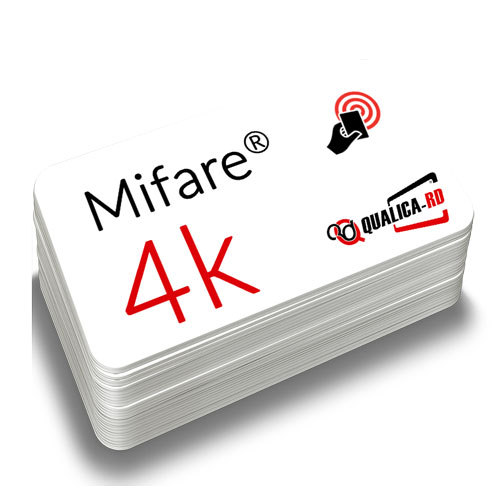
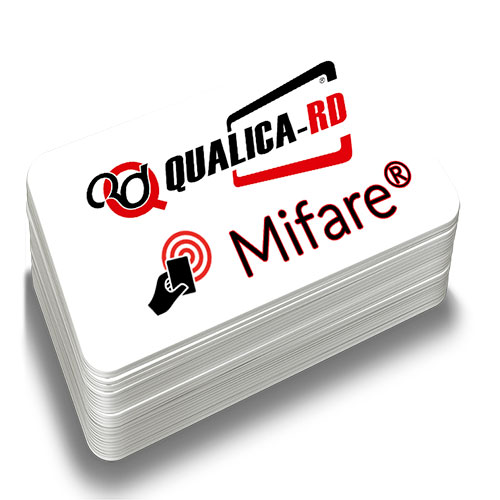
MIFARE® 4K WHITE CARD
MIFARE® 4K WHITE CARD
- Product ID: 46167
- Category: Cards
WHITE MIFARE CARD® 4K QUALICA-RD HQ
1. What is MIFARE®?
MIFARE® technology is an RFID technology at 13.56 MHz ISO 14443A and 14443B manufactured by Philips.
MIFARE® is often referred to as a «smart card» technology. This is based on the fact that MIFARE® technology allows reading and writing on the card. In reality, MIFARE® is simply a memory card in its Classic, Icode, ultralight versions and if it is cryptographic (smart) in the versions with Desfire, Plus, Ultralight C processor.
MIFARE® contactless smart cards and MIFARE® card readers/writers were initially developed for payment transactions in public transport systems. Thanks to its short reading range, MIFARE® technology was particularly suitable for performing addition/subtraction functions. Although contact smart cards can also perform those functions, contactless readers are faster and easier to use and practically require no maintenance. Contactless cards, for their part, suffer almost no wear.
2. What is the typical reading range of MIFARE® contactless card readers?
The typical reading range of a MIFARE® contactless smart card reader is 2.5 to 10 cm in its Classic, Desfire, Ultralight, Icode versions and up to several meters in the Icode version (with special reader). In North America, due to FCC regulations, the reading range is at the lower end of the scale.
3. Can MIFARE® contactless card readers be used in existing access control systems?
MIFARE® contactless smart card readers can be used alongside existing access control systems. There are some technical aspects to consider:
The standard MIFARE® card comes factory programmed by Philips with a unique 32-bit serial number. This is a random number that does not contain a location code. If you are using another bit format in your access control system and wish to simultaneously use MIFARE® contactless cards/readers of 32 bits, make sure to verify that the access control system in use accepts multiple bit formats and location codes simultaneously.
4. What memory capacity do MIFARE® cards have?
It depends on the MIFARE® in question. The MIFARE® S50 module, from Philips, has one (1) Kbyte of EPROM memory. MIFARE® S70 has 4 Kbytes of EPROM memory. Desfire has 2, 4, 8 Kbytes, etc.
5. How many sectors do MIFARE® cards have?
The MIFARE® 1K card (the most common of all) has 16 independent sectors that can be configured as «wallets» or for general information storage. The first sector (0) is commonly used as the card directory and contains the UID (block 0), leaving 15 segments for data or «wallets». Blocks 3 contain the security keys Key A and Key B, so they are also not suitable for storing data.
6. How many applications can be hosted on a single MIFARE® card?
In total, a MIFARE® card can store a maximum of 15 different applications. These applications are separated individually using unique keys (passwords) for each sector. The only requirement is that the different application providers must cooperate in programming the MIFARE® Application Directory (MAD) and that the keys for these directories must be available to all application providers.
7. What ISO standard do MIFARE® cards comply with?
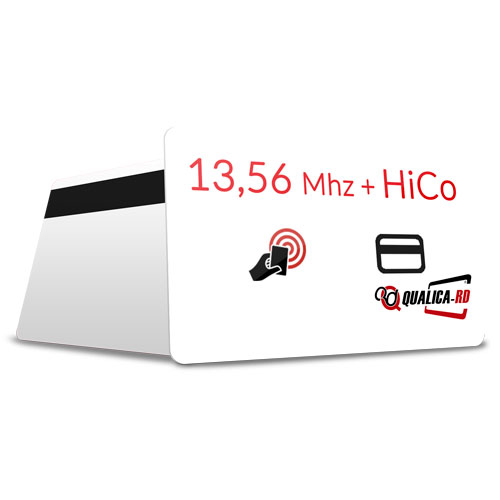
MIFARE® is a contactless technology at 13.56 MHz, described in ISO 14443 Type A (Classic) and B (Desfire) standards. This card is designed to allow you to embed an optional contact smart chip module. If you do so, the card would also comply with ISO 7816 standard. This card is designed to have a magnetic stripe. In the configuration with a magnetic stripe, the card also complies with ISO 7811 standard.
8. Is MIFARE® information encrypted?
The data transmission via radio frequency between the card and the MIFARE® reader is encrypted. However, the data we store on the card is not encrypted. Access to the data is protected by a 48-bit key, so it can only be read by a reader that contains the correct key.
MIFARE® technology allows mutual authentication between the card and the reader. A random number is generated, and according to the keys, a message is sent from the card to the reader. The reader then sends a message back to the card. This operation is performed three times to verify that the card presented to the reader is valid.
WHITE MIFARE® CARD® 4K QUALICA-RD HQ
1. What is MIFARE®?
MIFARE® technology is an RFID technology at 13.56 MHz ISO 14443A and 14443B manufactured by Philips.
MIFARE® is often referred to as a «smart card» technology. This is based on the fact that MIFARE® technology allows reading and writing on the card. In reality, MIFARE® is simply a memory card in its Classic, Icode, ultralight versions and if it is cryptographic (smart) in the versions with Desfire, Plus, Ultralight C processor.
MIFARE® contactless smart cards and MIFARE® card readers/writers were initially developed for payment transactions in public transport systems. Due to its short reading range, MIFARE® technology was particularly suitable for performing addition/subtraction functions. Although contact smart cards can also perform those functions, contactless readers are faster and easier to use and practically require no maintenance. Contactless cards, for their part, suffer almost no wear.
2. What is the typical reading range of MIFARE® contactless card readers?
The typical reading range of a MIFARE® contactless smart card reader is 2.5 to 10 cm in its Classic, Desfire, Ultralight, Icode versions and up to several meters in the Icode version (with special reader). In North America, due to FCC regulations, the reading range is at the lower end of the scale.
3. Can MIFARE® contactless card readers be used in existing access control systems?
MIFARE® contactless smart card readers can be used alongside existing access control systems. There are some technical aspects to consider:
The standard MIFARE® card comes factory programmed by Philips with a unique 32-bit serial number. This is a random number that does not contain a location code. If you are using another bit format in your access control system and wish to simultaneously use MIFARE® contactless cards/readers of 32 bits, make sure to verify that the access control system in use accepts multiple bit formats and location codes simultaneously.
4. What memory capacity do MIFARE® cards have?
It depends on the MIFARE® in question. The MIFARE® S50 module, from Philips, has one (1) Kbyte of EPROM memory. MIFARE® S70 has 4Kbytes of EPROM memory. Desfire has 2, 4, 8Kbytes, etc.
5. How many sectors do MIFARE® cards have?
The MIFARE® 1K card (the most common of all) has 16 independent sectors that can be configured as «wallets» or for general information storage. The first sector (0) is commonly used as the card directory and contains the UID (block 0), leaving 15 segments for data or «wallets». Blocks 3 contain the security keys Key A and Key B, so they are also not suitable for storing data.
6. How many applications can be hosted on a single MIFARE® card?
In total, a MIFARE® card can store a maximum of 15 different applications. These applications are individually separated using unique keys (passwords) for each sector. The only requirement is that the different application providers must cooperate in programming the MIFARE® Application Directory (MAD) and that the keys for these directories must be available to all application providers.
7. What ISO standard do MIFARE® cards comply with?
MIFARE® is a contactless technology at 13.56 MHz, described in ISO 14443 Type A (Classic) and B (Desfire) standard. This card is designed to allow you to embed an optional contact smart chip module. If you do so, the card would also comply with ISO 7816 standard. This card is designed to have a magnetic stripe. In the configuration with magnetic stripe, the card also complies with ISO 7811 standard.
8. Is MIFARE® information encrypted?
The data transmission via radio frequency between the card and the MIFARE® reader is encrypted. However, the data we store on the card is not encrypted. Access to the data is protected by a 48-bit key, so it can only be read by a reader that contains the correct key.
MIFARE® technology allows mutual authentication between the card and the reader. A random number is generated, and according to the keys, a message is sent from the card to the reader. The reader then sends a message back to the card. This operation is performed three times to verify that the card presented to the reader is valid.