
Business Hours: Monday to Thursday: 7:00 AM – 3:00 PM (Support until 5:00 PM) | Friday: 7:00 AM – 3:00 PM (Support until 2:30 PM)
(+34) 957 326 107
Business Hours: Monday to Thursday: 7:00 AM – 3:00 PM (Support until 5:00 PM) | Friday: 7:00 AM – 3:00 PM (Support until 2:30 PM)
Copyright © 2025 Qualicard. All Rights Reserved.


Technical Support
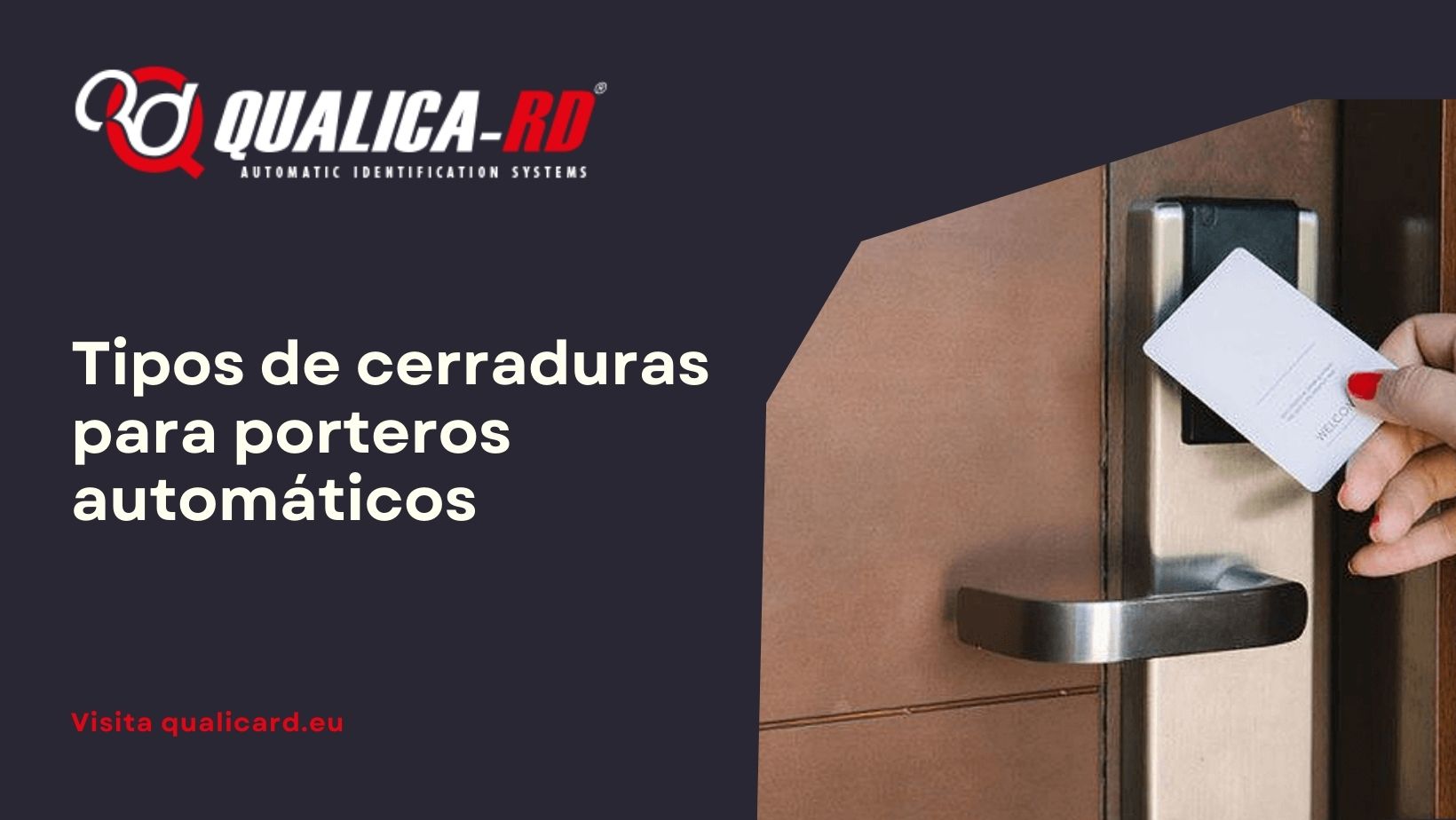
Types of locks for automatic door openers
September 10, 2025
Types of locks for automatic door openers: complete guide
In this article, you will find a detailed and technical explanation about the types of locks for automatic door openers, aimed at helping you choose the most suitable solution according to your needs. The content is designed to position effectively, generate trust, and offer value, naturally integrating semantic terms such as access control systems.
Electromagnetic lock
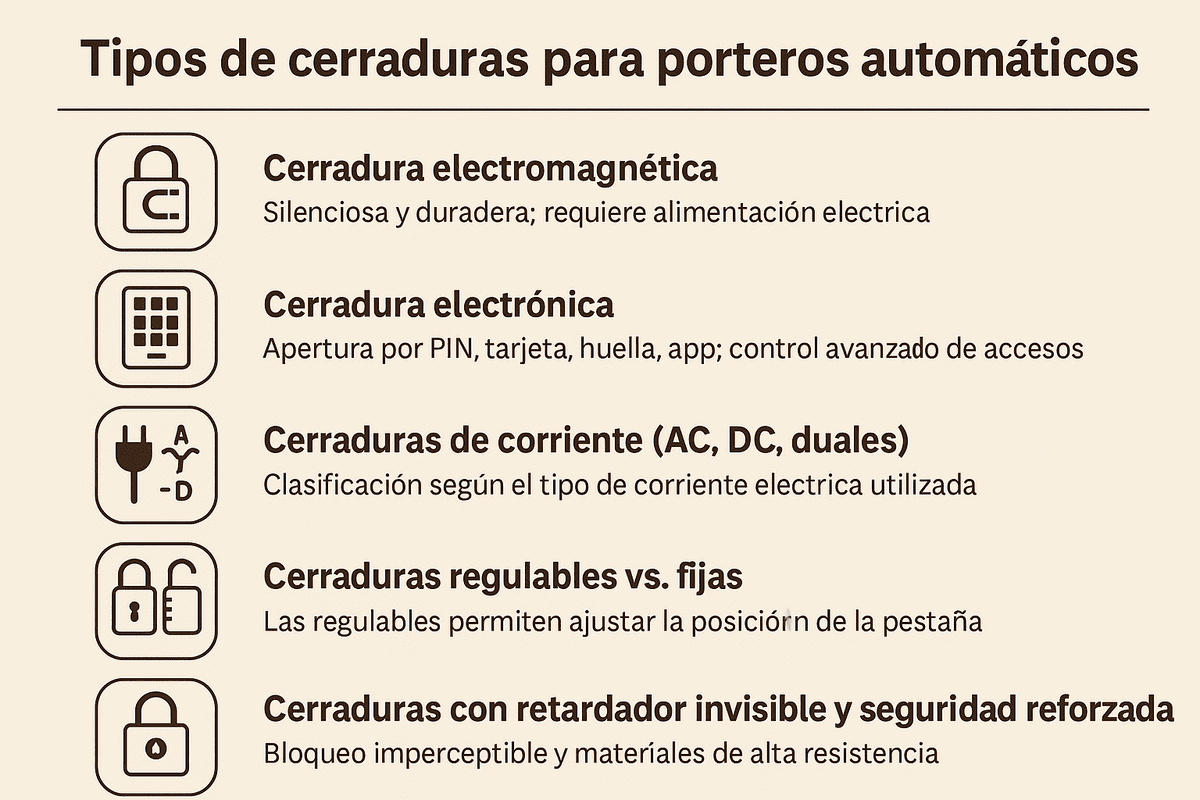
Electromagnetic locks are based on an electromagnet that keeps the door closed until an electric impulse is received that releases the latch. It is one of the most commonly used systems in residential communities, offices, or residential areas. Its installation is relatively simple, and its operation is silent and durable. These locks are versatile: they can be designed to unlock or lock in case of a power outage, and they even incorporate backup batteries to ensure their operability in emergencies.
Within the framework of access control systems, this type of lock integrates very well with intercoms, push buttons, and remote controls. Additionally, it prevents accidental openings or external manipulation, offering a high level of security. However, it requires constant electrical power, which means that a backup system must be planned in case of network outages.
Electronic lock with code or card
This type of lock combines the intercom with advanced access: it can be opened using a PIN, RFID card, fingerprint, or even a mobile app, allowing for a more sophisticated and personalized entry control. Its use is common in high-traffic environments such as offices, hotels, or corporate buildings, as it allows for the management of individual access permissions and specific schedules, in addition to recording entries and exits.
As part of access control systems, these locks allow for the integration of biometric control and digital logging, ideal for those who need traceability and flexibility. They are more expensive than simple electromagnetic locks and require proper technical maintenance to ensure optimal long-term operation.
Locks by type of electrical current (AC, DC, dual)
The choice of current type is key. Dual locks (AC/DC) are the most common because they work with both currents and offer great versatility. However, some more demanding intercom installations require specific direct current (DC) locks to avoid overloading the intercom circuit and prevent frequent breakdowns.
Classifying locks under this perspective allows for optimizing technical compatibility and durability. If your intercom is modern and sensitive, a DC option may be more suitable. If you seek flexibility without complications, a dual lock can efficiently meet the needs.
Adjustable locks vs. fixed locks
Adjustable locks allow for the latch to be adjusted by a few millimeters, facilitating a proper closure even if the door does not close tightly; it is useful for doors that remain ajar due to play.
On their side, the fixed locks have a stiffer and more resistant tab, suitable for high-security environments where hardness is prioritized over tolerance. Both options represent alternatives within the ecosystem of Types of locks for automatic door openers, and your choice will depend on the type of door and level of demand in your access control system.
Locks with invisible delay and reinforced security
Some models incorporate invisible delays, which block the opening without a physical piece acting; their function is imperceptible, but effective in preventing accidental openings.
Reinforced security locks include internal components made from very durable materials, such as hardened steel; they are common in banks, jewelry stores, and high-risk access points.
Types of locks, comparative chart
| Type of lock | Main advantages | Ideal for | Precautions |
|---|---|---|---|
| Electromagnetic | Silent, easy installation, with backup | Residences, communities, offices | Electrical dependency, need for batteries |
| Electronic (PIN/RFID/app) | Personalized access, entry logging | Hotels, corporate buildings | Higher cost, requires technical maintenance |
| Current (AC/DC or DC) | Flexible (AC/DC) or technical (DC) | Sensitive intercoms, modern video intercoms | Requires certification of electrical compatibility |
| Adjustable vs. fixed | Fine adjustment or robustness | Misaligned doors / security access | Adjustable ones are less durable; fixed ones are less tolerant |
| Invisible delay / reinforced | Imperceptible locking, extreme resistance | Institutions, jewelry stores, critical environments | High cost, specialized installation |
Which lock to use according to the type of intercom?
The appropriate choice of lock type largely depends on the model and technology of the installed intercom. Below are some typical scenarios:
Modern video intercom with sensitive line and advanced electronics
If your system is a state-of-the-art video intercom, which may experience overload or interference with dual devices, a direct current (DC) lock is recommended. This minimizes failures in the audio circuit and extends the lifespan of the equipment.
Moreover, if access requires high formality, an electronic lock with PIN or card can be integrated as part of a complete access control system, managing schedules and traceability.
Traditional intercom in residential community
For a standard installation in a community of neighbors, a dual electromagnetic lock (AC/DC) is usually sufficient due to its reliability, ease of installation, and low cost. If the door has play due to frequent use, the adjustable model provides comfort without compromising security.
In this context, the automatic door can be complemented with a simple access control system such as RFID cards, especially if the goal is to eliminate traditional physical keys without altering the base system.
Corporate or high-security access
In offices or spaces with high security requirements, the ideal solution is to combine an electronic lock with biometric control or cards, integrated within a broader access control system. This allows for managing permissions by person, recording access, and maintaining audit trails.
For maximum physical protection, it is recommended to opt for locks with a reinforced structure and invisible delay, which provide a solid and discreet barrier against tampering or intrusion attempts.
In short, knowing the types of locks for automatic door openers and their integration within access control systems is essential to ensure security, comfort, and reliability. The most suitable option will depend on the type of door opener, the frequency of use, the need for traceability, and the expected robustness.
Real use cases: What type of lock to choose based on your situation?
To help you make a better decision, we present three practical cases where different users chose a lock for their automatic intercom based on their needs. These examples illustrate how to apply the explained concepts and how access control systems can adapt to different contexts.
🔒 Case 1: Neighbors’ community with traditional intercom – Dual electromagnetic lock
The “Jardines del Sur” neighbors’ community had a traditional automatic intercom installed for years. The system worked well, but the electric lock was starting to fail due to continuous use. They contacted a technician who recommended a dual electromagnetic lock (AC/DC) with a silent opening option. This allowed them to maintain compatibility with their old system and improve security without the need to change all the equipment.
Moreover, they decided to install an opening button from the inside of the turnstile, integrating a basic access control system that provides more convenience for the concierge. The installation was quick, and the community particularly appreciated the low cost and simplicity of the system.
📱 Case 2: Modern office with access control – RFID electronic lock
At the technology company “InnovaTech”, located in a corporate building, they decided to replace the traditional key system with a access control system with RFID electronic locks. These were integrated with their IP intercom, allowing each employee to enter with their personalized card.
Moreover, the administrator can manage permissions from a web app, revoke access in real time, and have a complete record of entries and exits. This type of lock not only improved security but also optimized internal processes and reduced issues related to lost keys. It was a strategic investment with immediate returns in terms of management and security.
🏡 Case 3: Single-family home with camera intercom – Lock with invisible retention
Ana and Luis, a couple living in a single-family home with an automatic intercom with a camera, were looking for a solution that combined security and aesthetics. Their technician installed an electromagnetic lock with an invisible retention system, which remains locked without showing obvious external elements. The opening is done from the interior monitor or via remote control.
This solution was ideal for them, as they valued the aesthetics of the main door. At the same time, they integrated an access control system with codes for family and friends, eliminating the need to hand out physical keys. This combination provided them with peace of mind and convenience without altering the design of their home.
Frequently Asked Questions about Types of Locks for Intercoms
In this section, we address some of the most common questions users have when choosing between the different types of locks for intercoms. These answers will help you make informed decisions and better understand how these systems work.
Are all electric locks compatible with any intercom?
No, not all locks are compatible with all intercoms. It is important to verify whether the system operates on alternating current (AC), direct current (DC), or if it requires a dual model. Additionally, some modern video intercoms are more sensitive and require specific locks to avoid overloads or communication failures.
What is the safest lock for an intercom?
The safest lock will depend on the environment and type of access. For private homes, locks with invisible retention or electronic locks with access control are excellent options. In contrast, for communities or office buildings, an electromagnetic lock with a dual system can offer a good balance between security and functionality.
Is it advisable to integrate a lock with an access control system?
Yes, integration with an access control system significantly improves security and entry management. This type of system allows the use of cards, codes, mobile apps, or biometrics, which eliminates the dependence on physical keys and enables more efficient and traceable access control.
Share
Related News



Fingerprint vs Facial Recognition vs Palm: Which Biometric…
The B2B buyer’s dilemma You have to implement an access control or…
Go to Post
Biometric Access Control and GDPR: 2026 Regulatory Compliance…
Is it legal to use fingerprint or facial recognition to clock in…
Go to Post
Access barrier in access control systems
La barrera de acceso en sistemas de control de acceso es uno…
Go to Post