
Business Hours: Monday to Thursday: 7:00 AM – 3:00 PM (Support until 5:00 PM) | Friday: 7:00 AM – 3:00 PM (Support until 2:30 PM)
(+34) 957 326 107
Business Hours: Monday to Thursday: 7:00 AM – 3:00 PM (Support until 5:00 PM) | Friday: 7:00 AM – 3:00 PM (Support until 2:30 PM)
Copyright © 2025 Qualicard. All Rights Reserved.


Technical Support
Access control for gyms
July 1, 2025
{“origen”:”es”,”destino”:”en”,”texto”:”
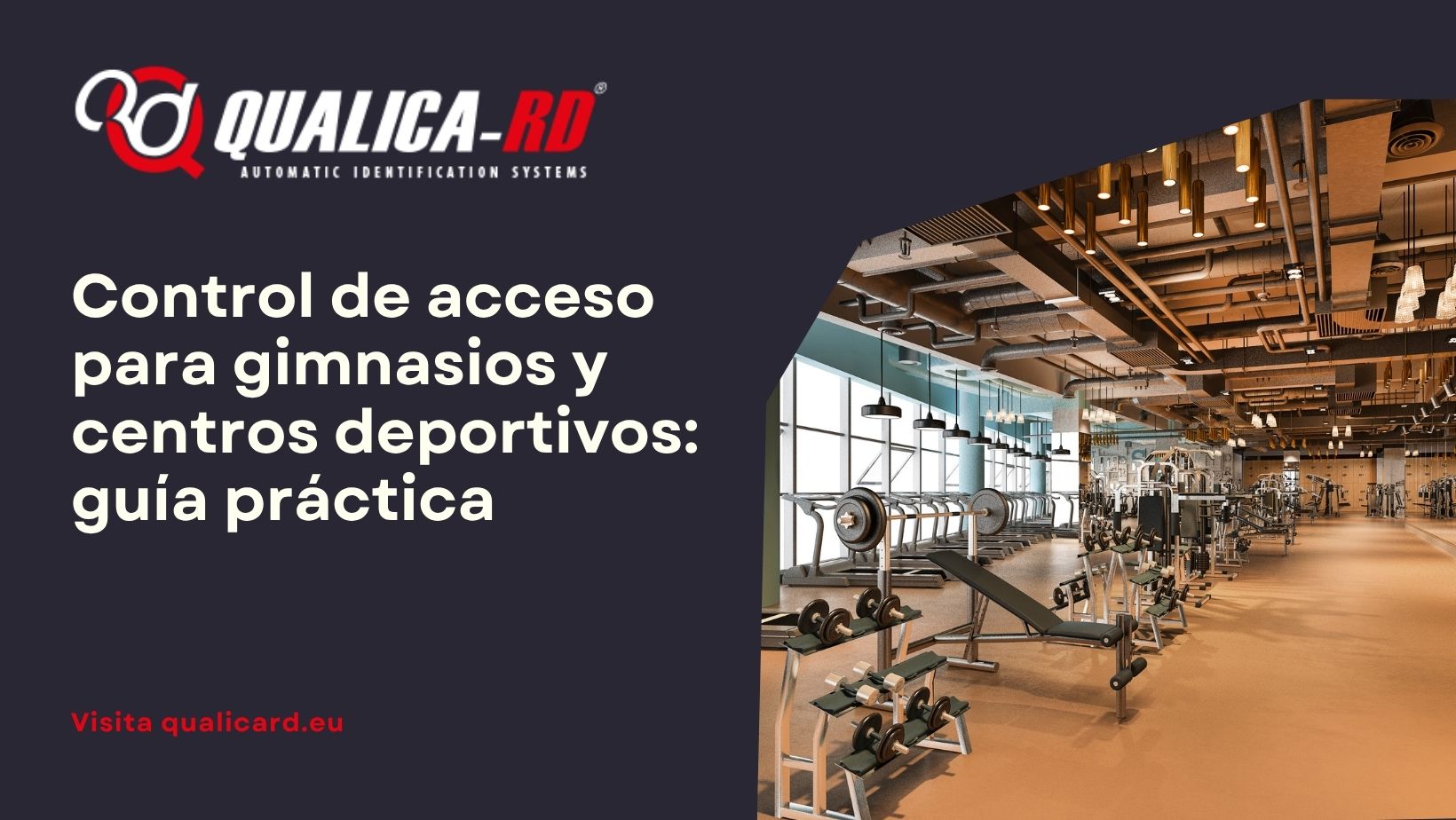
Access Control for Gyms and Sports Centers: Practical Guide
In this practical guide, we will thoroughly address access control for gyms and sports centers, a vital element for security, efficient management, and user experience. From types of systems, advantages and disadvantages, to recommendations for implementing a good system. Ideal for both sports facility managers and gym owners looking to optimize their processes and protect their resources.
What is access control?
Access control is the technology and procedures aimed at authorizing, recording, and managing the access of individuals to sports facilities. Through devices such as turnstiles, RFID readers, biometric recognition, or mobile access, it ensures that only authorized users can enter restricted areas, guaranteeing security and compliance with permissions.
Importance of a good access control system
Having a robust access control system in a gym or sports center is essential for several reasons:
- Security: Prevents unauthorized access, theft, and risks related to intruders.
- Capacity control: Prevents exceeding the allowed capacity and assists in emergency situations.
- Membership management: Blocks users with overdue payments or access levels not compatible with certain areas.
- Automation: Reduces the need for staff at reception and improves operational efficiency.
- Customer experience: Facilitates smooth access, without queues or delays.
- 24/7 access: Allows opening outside conventional hours without risk.
- Data for decisions: Provides usage statistics, helping to plan resources and optimize the offer.
Types of access control systems
There are several technologies adapted to different needs:
Turnstiles
Physical devices such as tripod or full-height turnstiles that block passage until validation is presented. Very common and reliable, but not suitable for individuals with reduced mobility.
Motorized barriers (Slim Gate, Express Gate)
Glass screens or panels that open after electronic validation. Designed for greater fluidity and modern aesthetics.
Card readers, RFID, and QR codes
Systems where the user presents a tag, RFID card, or a mobile QR code to enter. Very versatile and integrable with apps adding functionality.
Biometrics and facial recognition
Secure and intelligent technologies that prevent identity theft and guarantee non-transferable access.
PIN and numeric keypads
Always want to personalize with codes, although less secure, as they can be easily shared.
Mobile integration
The user accesses from their smartphone or smartwatch, using dedicated apps and dynamic codes – a modern and convenient solution.
Advantages and disadvantages: comparative table
| System | Advantages | Disadvantages |
|---|---|---|
| Turnstiles | High security, precise counting, easy integration | Not accessible for wheelchairs, visually intrusive |
| Slim/Express Gate | Fluidity, modern aesthetics, accessible | High cost, technical maintenance |
| RFID / cards / QR | Fast, economical, integrable with software | Loss or theft of cards, possible duplication |
| Biometrics / facial | Maximum security, non-transferable | Privacy concerns, high cost |
| PIN | Economical, easy to implement | Low security, shareable codes |
| Mobile app | Very convenient, does not require physical hardware | Dependence on smartphone, battery/connectivity care |
Main components of an access control system
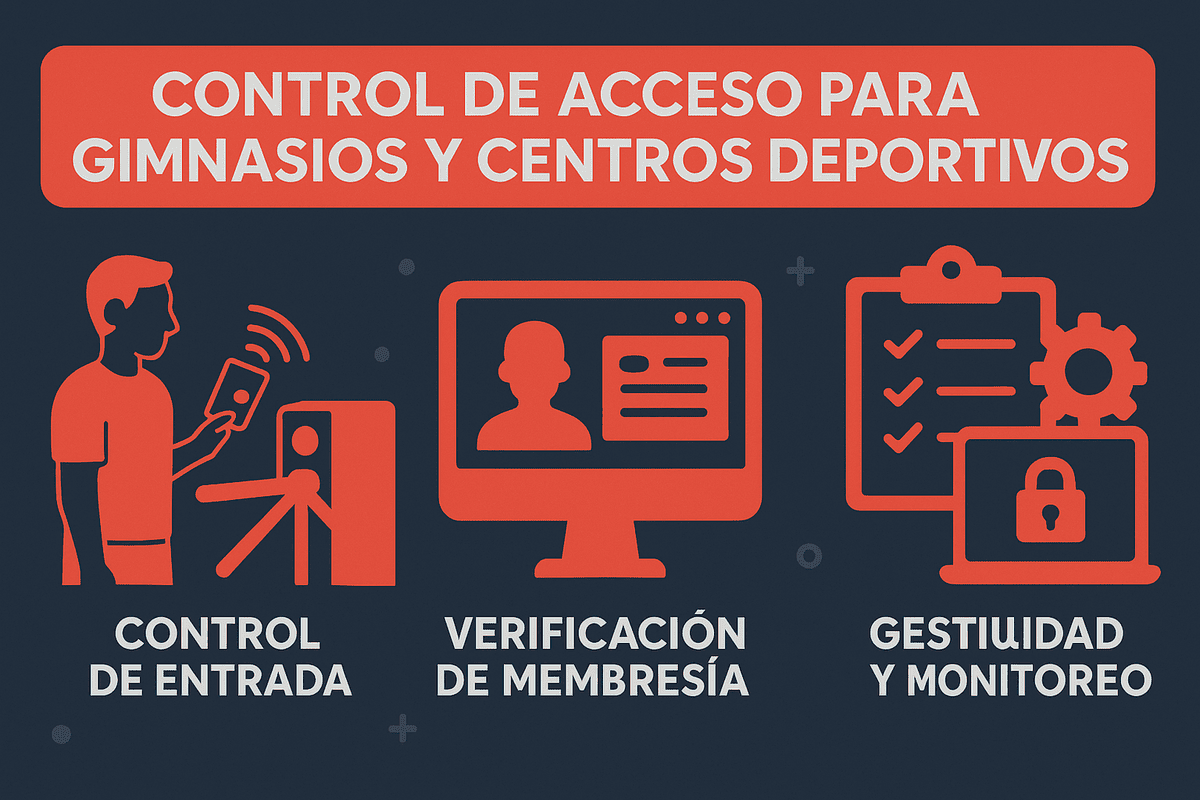
An efficient access control system for gyms and sports centers consists of three key elements: hardware, software, and infrastructure. The hardware includes physical devices such as turnstiles, biometric readers, card readers, or automated barriers. The management software allows for credential administration, permission definition, schedule control, and real-time usage reporting. Finally, the infrastructure, whether cloud-based or local, ensures connectivity, security, and scalability of the system. The correct integration of these components is essential to ensure smooth, secure operation tailored to the specific needs of the sports center.
- Hardware: turnstiles, barriers, biometric readers, QR/RFID readers.
- Management software: manages permissions, capacity, statistics, and automated rules.
- Infrastructure: can be cloud-based (remote management, scalable) or local.
- Integration: links with membership systems, lighting, alarms, or CRM.
Steps to choose and implement a good access control
- Needs diagnosis: Identify sensitive areas, schedules, capacity, and membership levels.
- Select appropriate technology: Based on a balance between security, convenience, and budget.
- Evaluate hardware and software: Consider maintenance, scalability, and quality of the provider.
- Integration plan: Ensure communication with management system, CRM, and automation.
- Pilot test and training: Trial access and train users and staff in correct usage.
- Monitoring and adjustment: Analyze statistics, detect incidents, and adjust rules.
- Privacy policy and GDPR: In the case of biometric technologies, implement clear and secure protocols.
Recommendations for a successful implementation
For an access control system to function effectively and always maintain its purpose, consider:
- Universal accessibility: Include wide doors or alternative systems for reduced mobility.
- Credential flexibility: Offer RFID, app, and facial recognition to adapt to different users.
- Failure tolerance: Plan for manual or emergency access in case of power outages.
- Constant updates: Keep firmware versions, security patches, and monitor regulatory changes.
- Communication with users: Explain the benefits of the system and how to use it, with clear signage.
- Data protection: In biometric technologies, ensure compliance with regulations and safeguard information.
Conclusion on access control for gyms
Access control for gyms is much more than automatic doors; it is an integral system that protects facilities, optimizes operations, drives loyalty, and enhances member experience. The key is to choose the right technology, implement a robust infrastructure, integrate management systems, and educate both staff and members. With careful planning and a well-sized system, your gym will reach new levels of security, efficiency, and customer satisfaction.”}
Start today: Diagnose your needs and contact specialized providers to obtain demos and a budget tailored to your installation.
Frequently asked questions about Access control for gyms and sports centers
The access control for gyms and sports centers can raise questions both in its implementation and in its operation. Below, we address some of the most common questions to help you make informed decisions.
What is the best type of access control for a small gym?
For small gyms, the ideal choice is to opt for simple yet efficient systems such as RFID readers or QR codes integrated with membership management software. They are accessible solutions, easy to implement, and scalable as the business grows.
Is it safe to use facial recognition or biometrics?
Yes, these methods offer high levels of security and prevent unauthorized access. It is essential to comply with personal data protection regulations and ensure that the provider includes privacy and encryption mechanisms.
What happens if there is a power outage or system failure?
Modern systems include backup batteries or manual access protocols for emergencies. Additionally, it is advisable to have a contingency plan to ensure the safe entry and exit of users in case of any unforeseen events.
Share
Related News



Fingerprint vs Facial Recognition vs Palm: Which Biometric…
The B2B buyer’s dilemma You have to implement an access control or…
Go to Post
Biometric Access Control and GDPR: 2026 Regulatory Compliance…
Is it legal to use fingerprint or facial recognition to clock in…
Go to Post

Access barrier in access control systems
La barrera de acceso en sistemas de control de acceso es uno…
Go to Post