Business Hours: Monday to Thursday: 7:00 AM – 3:00 PM (Support until 5:00 PM) | Friday: 7:00 AM – 3:00 PM (Support until 2:30 PM)
(+34) 957 326 107
Business Hours: Monday to Thursday: 7:00 AM – 3:00 PM (Support until 5:00 PM) | Friday: 7:00 AM – 3:00 PM (Support until 2:30 PM)
Copyright © 2025 Qualicard. All Rights Reserved.


Technical Support
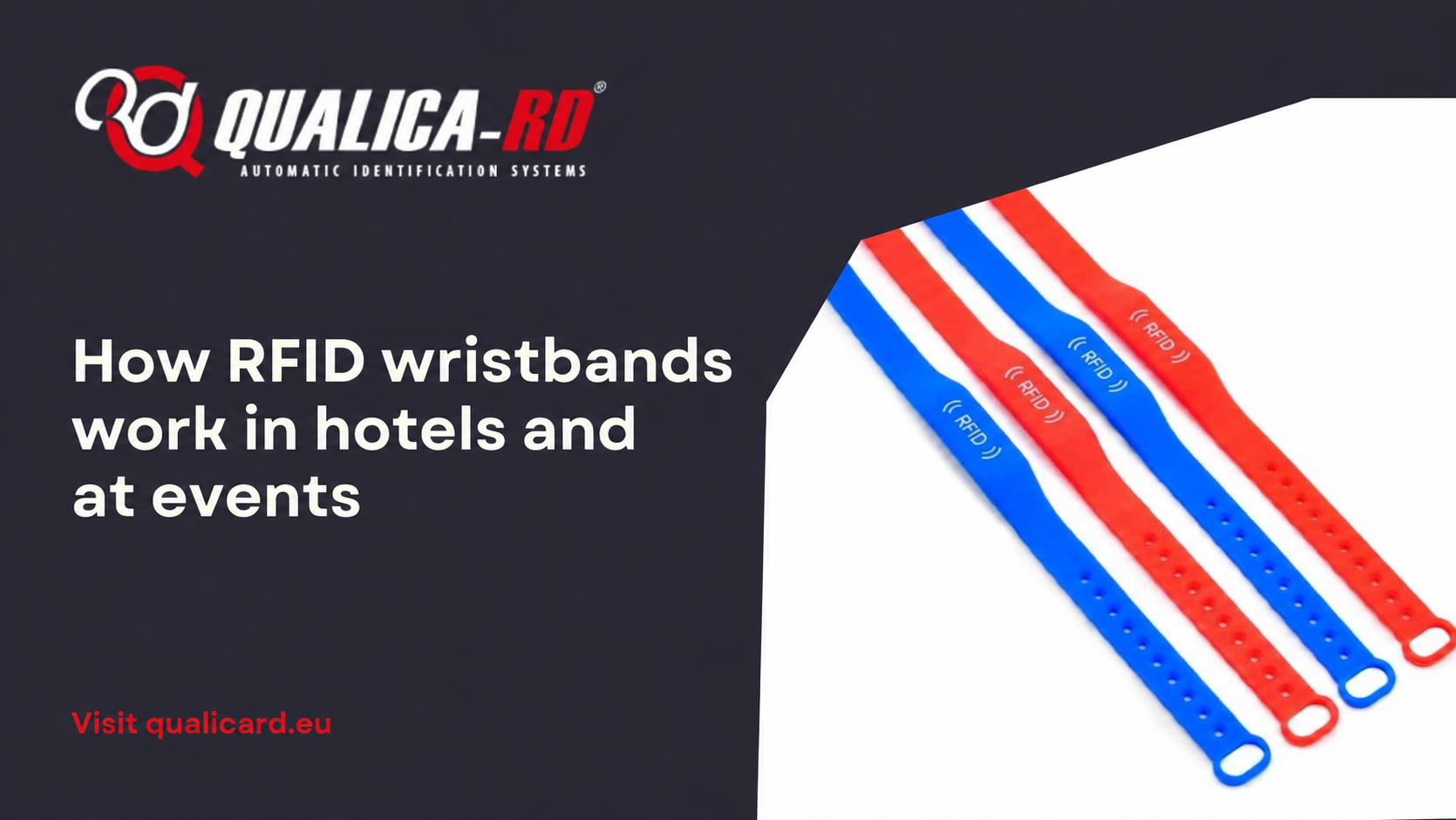
How RFID wristbands work in hotels and events
March 1, 2026
How RFID wristbands work in hotels and at events: technology, uses and benefits
In recent years, RFID technology has revolutionized multiple sectors, especially tourism and event organization. Understanding how RFID wristbands work in hotels and events is key to understanding why they have become an innovative solution to improve user experience, optimize processes, and reinforce security.
RFID wristbands allow automating functions such as access control, contactless payments, and real-time user identification, being a very efficient automatic identification system. In this article, we analyze in depth how they work, their benefits, and practical applications, providing useful and updated content to respond to the user’s search intent.
What are RFID wristbands and how do they work?
RFID (Radio Frequency Identification) wristbands are devices that incorporate a chip and an antenna capable of storing and transmitting information via radio waves. This system allows identifying a person or user without the need for physical contact, facilitating access and validation processes quickly and securely.
To understand how RFID wristbands work in hotels and events, it is important to know that these wristbands interact with RFID readers installed at strategic points. When the user brings the wristband close to the reader, the reader captures the signal and accesses the stored information, enabling actions such as opening doors, making payments, or recording access.
Applications of RFID wristbands in hotels
In the hotel sector, RFID wristbands have transformed the guest experience by eliminating the need for physical keys or traditional cards. Hotels use these wristbands as a comprehensive solution to manage multiple services from a single device.
Among its most notable uses is access control to rooms, VIP areas, pools, or gyms. In addition, they allow payments to be made within the hotel, which improves customer comfort and reduces the use of cash or physical cards.
Benefits in hotels
RFID wristbands provide numerous benefits for both guests and the hotel’s internal management. From process automation to improved security, their implementation represents a significant advance in the digitalization of the sector.
They also facilitate the personalization of the customer experience, as the system can store preferences and consumption habits, allowing more tailored services to be offered to each user.
Using RFID wristbands at events and festivals
In mass events such as festivals, conferences or fairs, RFID wristbands have become an essential tool for organization. They allow managing large volumes of attendees efficiently and securely.
Understanding how RFID wristbands work in hotels and events in this context involves analyzing their ability to streamline access, prevent fraud, and improve the overall event logistics through an automated identification system.
Event functionality
RFID wristbands allow quick access to venues, eliminating long queues at entrances. Furthermore, they facilitate the management of VIP areas, backstage, or exclusive areas through instant validation systems.
Another key aspect is the possibility of making cashless payments, which improves the user experience and increases consumption within the event, benefiting the organizers.
Comparison: RFID wristbands in hotels vs events
Below is a comparative table that helps to better understand how RFID wristbands work in hotels and events and their main differences depending on the context of use.
This analysis allows us to clearly visualize the specific advantages of each sector and how this technology adapts to different needs.
| Aspect | Hotels | Events |
|---|---|---|
| Main function | Access to rooms and services | Access and payment management |
| Usage period | Guest stay | Event duration |
| Access control | Rooms and internal areas | Specific zones and venues |
| Payments | Hotel services | Consumption at stands or bars |
| Personalisation | High (guest profile) | Medium (entry type) |
| Data collected | Customer habits | Attendee flow |
What do RFID wristbands bring to hotels and events?
The use of this technology brings value to both companies and users. Firstly, it significantly improves operational efficiency by reducing manual processes and minimizing human errors.
In addition, access control through RFID increases security, preventing unauthorized access and improving the traceability of people within a given space.
Tips for implementing RFID wristbands
To make the most of this technology, it is important to follow a series of recommendations that ensure its correct implementation and operation in both hotels and events.
Applying good practices will improve system performance and avoid technical or management issues that may affect user experience.
Current RFID technology trends
The use of RFID wristbands continues to evolve, incorporating new functionalities such as integration with mobile apps, geolocation systems, and advanced real-time data analysis.
These innovations allow further improving access control and offering personalized experiences, which makes this technology a growing trend in the tourism and events sector.
The future of RFID wristbands
Understanding how RFID wristbands work in hotels and events makes it possible to identify their impact on the digital transformation of these sectors. Their ability to improve security, optimize processes, and offer personalized experiences makes them a key tool.
As technology advances, its use will become increasingly common, establishing itself as an efficient and versatile solution for access management, payments, and experiences in tourist environments and large-scale events.
Frequently asked questions about how RFID wristbands work in hotels and at events
Below, we resolve some of the most common questions related to how RFID wristbands work in hotels and events. This section is designed to clarify key concepts and help you better understand their usefulness, implementation, and advantages in real environments.
Are RFID wristbands safe for access control?
Yes, RFID wristbands offer a high level of security, as they use unique identification systems that make duplication difficult. In addition, they allow centralized management of access control, which makes it easy to block or modify permissions in real time in the event of any incident.
Can RFID wristbands be used for payments at events and hotels?
RFID wristbands enable contactless payments by linking the device to an account or pre-loaded balance. This not only speeds up transactions but also improves the user experience by eliminating the need to carry cash or physical cards.
What happens if an RFID wristband is lost?
In case of loss, RFID wristbands can be quickly deactivated from the management system, preventing misuse. Subsequently, a new wristband can be issued with the same permissions, ensuring continuity of service and user security.
Share
Related News
-

-

-
 Types of RFID cards 17 Mar
NFC vs RFID: 5 key differences in access…
“Is it NFC or RFID?” We are asked this every week. The…
Go to Post
How to choose an industrial ruggedized terminal: 2026…
An industrial ruggedized terminal is not a “reinforced” mobile phone: it is…
Go to Post

Types of RFID cards
Types of RFID cards: a complete guide to understanding their uses and…
Go to Post