
Business Hours: Monday to Thursday: 7:00 AM – 3:00 PM (Support until 5:00 PM) | Friday: 7:00 AM – 3:00 PM (Support until 2:30 PM)
(+34) 957 326 107
Business Hours: Monday to Thursday: 7:00 AM – 3:00 PM (Support until 5:00 PM) | Friday: 7:00 AM – 3:00 PM (Support until 2:30 PM)
Copyright © 2025 Qualicard. All Rights Reserved.


Technical Support
PVC Plastic Cards
April 2, 2025
PVC Plastic Cards: Uses, Benefits, and Applications in Identifications
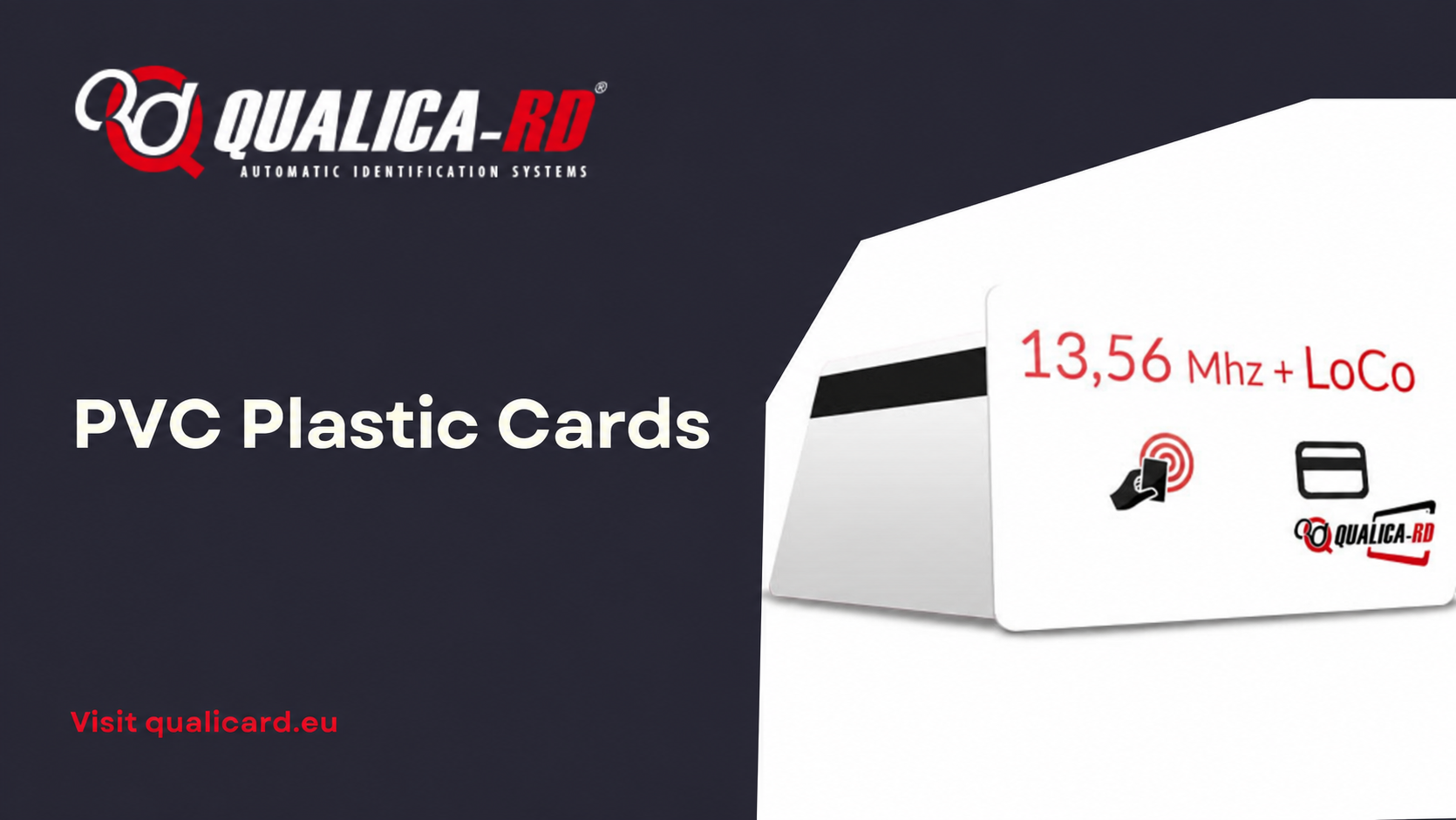
PVC plastic cards have established themselves as an essential solution in a wide range of professional and institutional sectors, thanks to their exceptional properties of durability, versatility, and customization capability. This type of card stands out for its resistance to wear, environmental factors like humidity and heat, and constant handling, making it a superior option compared to other materials like cardboard or laminated paper. Furthermore, its smooth surface allows for high-quality printing, ideal for reproducing logos, photographs, and text with sharpness and chromatic fidelity. From PVC business cards designed to make a lasting professional impression, to identification cards to print that facilitate access control and security in companies and institutions, their applications are as varied as their forms of customization. Today, custom plastic cards are used not only in the corporate realm but also in education, healthcare, events, retail, and loyalty programs. In this article, we will provide a complete overview of the technical characteristics, key benefits, and multiple applications of PVC plastic cards, emphasizing their strategic function as an identification and personnel management tool in professional environments.
What are PVC Plastic Cards?
PVC plastic cards are supports made from polyvinyl chloride, a resistant, lightweight, and flexible plastic material that has become the standard for multiple identification and professional presentation solutions. This type of card is known for its excellent ability to adapt to different formats, technologies, and printing types, giving it exceptional functionality in both personal and corporate applications.
The most common format for these cards is the so-called CR80 (85.60 mm x 53.98 mm), similar in size to a credit card, which facilitates its daily use and portability in wallets, holders, or lanyards. However, they can also be manufactured in custom formats depending on the required use or design. PVC plastic cards are produced in different thicknesses—with 0.76 mm being the most common—which directly influences their rigidity and resistance.
Thanks to their uniform, non-porous surface, they allow for high-quality printing, both single-sided and double-sided, using technologies like direct thermal printing or retransfer. This makes them the best option for producing custom plastic cards, with striking designs, variable data, and specific graphic elements for each need.
Beyond their function as visual cards, they can be integrated with different security and data reading technologies, such as smart chips, magnetic stripes, RFID, or QR codes, extending their applications beyond simple visual use. In summary, PVC cards combine design, functionality, and technology in a single product, which explains their enormous popularity in sectors such as commerce, education, healthcare, hospitality, and public administration.
Advantages of PVC Plastic Cards
PVC plastic cards offer a combination of technical and practical benefits that make them a preferred choice over other materials, especially when durability, aesthetics, and long-term functionality are sought. These cards not only fulfill visual and representative functions but can also be integrated with advanced technologies for data management, access control, and loyalty programs.
Below, we detail the main advantages that make plastic cards an efficient solution for multiple sectors and uses:
- High Durability: Unlike paper or cardboard cards, PVC cards withstand the passage of time without warping, tearing, or losing color. They are ideal for demanding or intensive use environments, such as access control or employee cards.
- Excellent Print Quality: Thanks to their smooth and uniform surface, these cards allow for printing images, logos, barcodes, text, and photographs with high definition. This is especially useful for printable identification cards or PVC business cards, where visual clarity is essential.
- Waterproof and Chemical Resistance: PVC material is unaffected by humidity and most chemicals, ensuring optimal preservation in any environment. This makes them perfect for sectors such as healthcare, industry, or hospitality.
- Total Customization: Cards can be tailored to the specific needs of each user or company. It is possible to include variable data, choose different colors, add custom images, apply matte or glossy finishes, and even add textures or special effects. Custom plastic cards thus become a powerful and functional branding tool.
- Compatibility with Smart Technologies: PVC cards can incorporate RFID chips, magnetic stripes, QR codes, or EMV chips, enabling their use in access control systems, electronic payments, transportation, attendance, or loyalty programs. This technological advantage is key in sectors such as retail, security, or education.
- Competitive Cost in Large Volumes: Although initial manufacturing may be slightly higher than other materials, the investment is offset by its durability. Furthermore, in large print runs, the cost per unit is significantly reduced, making them a cost-effective option for corporate or institutional projects.
- Versatility of Use: PVC cards adapt to a wide variety of functions: identification, access passes, membership cards, student IDs, member cards, gift cards, among others. Their design can be easily adapted to the intended final use, making them truly multifunctional.
- Professional Finish: Plastic cards offer an elegant and solid appearance, which conveys professionalism and confidence to the end user. This aspect is especially valued in PVC business cards, as they directly impact the brand perception or professionalism of the bearer.
In short, PVC plastic cards are a comprehensive solution that combines aesthetics, functionality, and resistance. Their ability to adapt to different needs—from identification cards to technological supports—makes them an indispensable tool in today’s professional environment.
Common Applications of PVC Cards
PVC cards are used in a variety of contexts, among which stand out:
Identification Cards
They are essential in companies, educational institutions and events to identify staff, students or attendees. These cards usually include the holder’s name, photograph and position, and can be integrated with access control systems to restrict entry to specific areas.
PVC Visitor Cards
They offer a modern and durable alternative to traditional paper cards. Their resistance and professional finish leave a lasting impression on customers and business partners. Additionally, they allow for creative and personalized designs that reflect the brand’s identity.
Membership and Loyalty Cards
Used by gyms, clubs and loyalty programs, these cards identify members and record their activity or point accumulation. The inclusion of magnetic stripes or barcodes facilitates the tracking and management of customer information.
Access Cards
Used in hotels, offices and public transport systems, they allow secure and controlled access to facilities or services. The integration of proximity chips or RFID technology improves security and efficiency in access control.
Gift Cards and Electronic Wallets
Retailers and restaurants use them to offer gift cards or prepaid payment systems, facilitating transactions and encouraging customer loyalty. These cards can be reloaded and reused, providing convenience for both the business and the consumer.
Customization of PVC Plastic Cards
The ability to customize PVC cards is one of their biggest attractions. Customization options include:
- Color printing: Allows faithful reproduction of corporate colors and specific designs.
- Variable data: Incorporation of unique information for each card, such as names, identification numbers, or membership codes.
- Security elements: Addition of holograms, ultraviolet inks or microtexts to prevent counterfeiting.
- Integrated technology: Inclusion of magnetic stripes, smart chips or QR codes to expand the card’s functionalities.
Considerations when Printing PVC Cards
When planning the printing of PVC cards, it is important to consider the following aspects:
- Material quality: Ensure that the PVC used is of high quality to guarantee the durability of the cards.
- Print type: Choose between offset, screen or digital printing according to specific needs and production volume.
- Finishes: Select between matte, gloss or textured finishes to achieve the desired effect and protect the print.
- Specialized supplier: Work with a company experienced in manufacturing and printing PVC cards to ensure a professional result that meets expectations.
Conclusion about PVC Plastic Cards
PVC plastic cards are an essential tool in many areas due to their durability, versatility and customization capabilities. Whether for printable ID cards, PVC business cards or custom plastic cards, they offer efficient and professional solutions that meet the identification, access and loyalty needs of various sectors. When considering their implementation, it is essential to pay attention to the quality of the material, the type of printing and the customization options to get the maximum benefit from these tools.
Frequently asked questions about PVC Plastic Cards
PVC plastic cards raise many questions among those looking for a durable and professional solution for identifications, access control, or corporate presentation. Below, we answer the most common queries about this type of card to help you make the best decision.
What is the lifespan of a PVC plastic card?
A PVC card can have a lifespan of up to 5 years, depending on use and the type of finish. Thanks to its resistance to water, friction, and temperature changes, it maintains its integrity and design for long periods, making it a cost-effective long-term investment.
Can I fully customize a PVC plastic card?
Yes. Customized plastic cards can be completely custom-designed. It is possible to choose colors, fonts, images, add variable data such as names or numbers, and also integrate elements such as chips, magnetic stripes or QR codes for additional functions such as access control or loyalty.
What type of printing is used on PVC cards?
The most common printing is direct thermal or retransfer printing, which allows high-definition results. Offset printing can also be used for large volumes. These methods ensure high image quality and durability, even in demanding environments.
Share
Related News
-
-
-
 Types of RFID cards 17 Mar
NFC vs RFID: 5 key differences in access…
“Is it NFC or RFID?” We are asked this every week. The…
Go to Post
How to choose an industrial ruggedized terminal: 2026…
An industrial ruggedized terminal is not a “reinforced” mobile phone: it is…
Go to Post
Types of RFID cards
Types of RFID cards: a complete guide to understanding their uses and…
Go to Post