
Business Hours: Monday to Thursday: 7:00 AM – 3:00 PM (Support until 5:00 PM) | Friday: 7:00 AM – 3:00 PM (Support until 2:30 PM)
(+34) 957 326 107
Business Hours: Monday to Thursday: 7:00 AM – 3:00 PM (Support until 5:00 PM) | Friday: 7:00 AM – 3:00 PM (Support until 2:30 PM)
Copyright © 2025 Qualicard. All Rights Reserved.


Technical Support
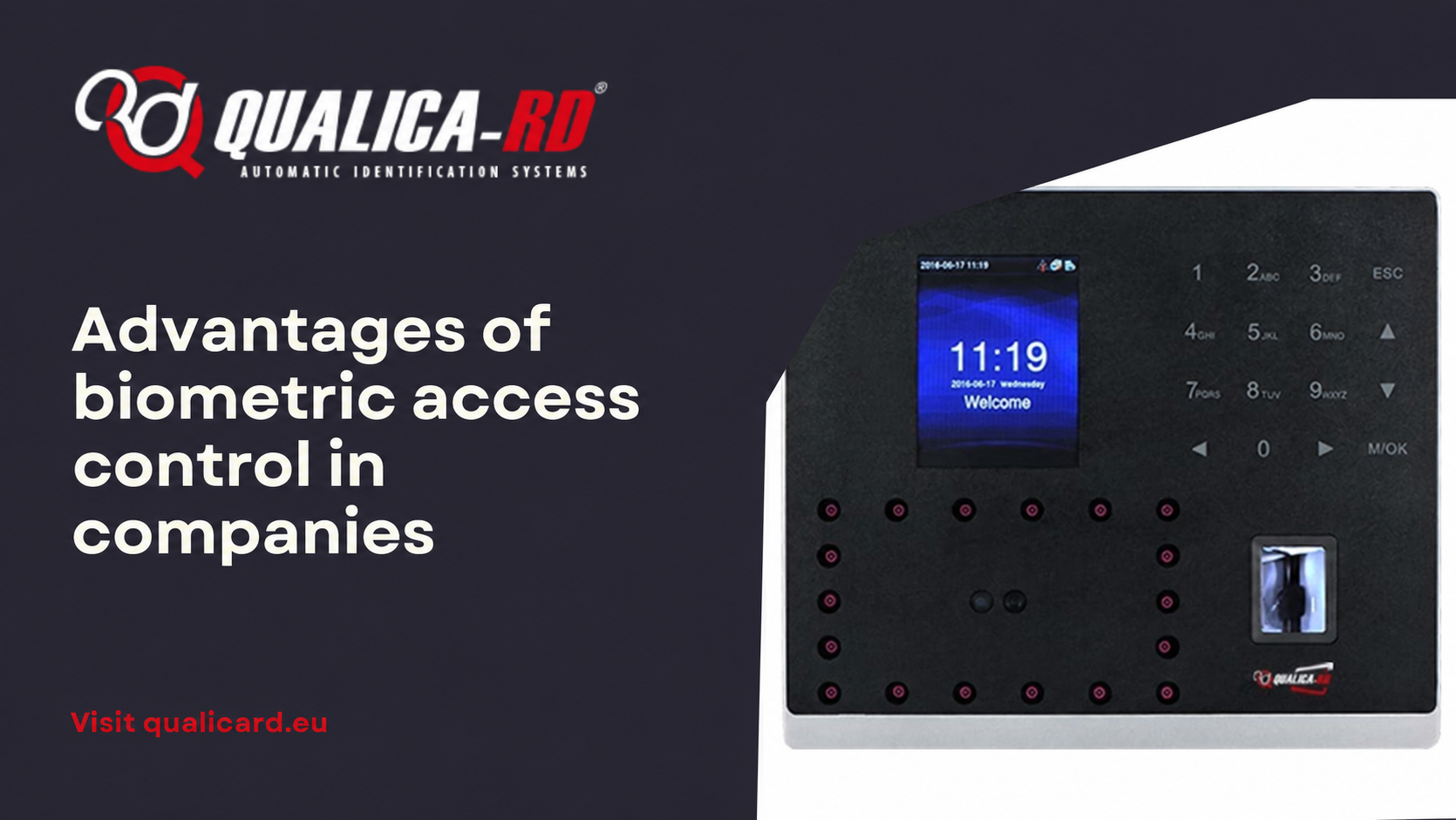
Advantages of biometric access control in companies
May 10, 2025
Advantages of Biometric Access Control in Companies
Biometric security has established itself as an efficient and reliable solution to protect access to business facilities. Understanding the advantages of biometric access control in companies is essential for making strategic decisions regarding physical security, personnel management, and regulatory compliance. This type of technology not only improves security levels but also optimizes processes and reduces long-term operational costs.
What is Biometric Access Control?
Biometric access control uses unique physical or behavioral traits of a person to verify their identity. These traits can include fingerprints, facial recognition, iris patterns, voice, or even palm access control. Thanks to biometrics, companies can ensure that only authorized personnel access specific areas, reducing the risk of intrusions or impersonations.
Main Biometric Technologies Used in Companies
There are various biometric technologies applied to access control in corporate environments. Below, we highlight the most common:
- Facial recognition: scans facial features to validate identity.
- Fingerprint: one of the most widespread systems due to its ease of implementation and low cost.
- Palm access control: advanced technology that scans the veins or patterns of the palm.
- iris or retina recognition: used in high-security environments such as laboratories or data centers.
Advantages of Biometric Access Control in Companies
Implementing access solutions for offices based on biometrics offers multiple benefits. Below, we list the most relevant:
1. Higher Level of Security
Biometric data is unique and non-transferable, making it nearly impossible to impersonate an identity. This significantly reduces the risk of unauthorized access.
2. Contactless Access
Thanks to facial recognition or palm access control, it is possible to access without the need for physical contact. This is especially valuable in environments where minimizing the risk of contagion is sought or greater hygiene is desired.
3. Elimination of Physical Credentials
By eliminating cards, keys, or PIN codes, losses, thefts, or misuse of these credentials are avoided.
4. Accurate Logging and Traceability
Biometric systems allow for detailed control of personnel entries and exits, facilitating audits, attendance controls, and compliance with labor regulations.
5. Integration with Other Systems
Biometric security can be integrated with video surveillance systems, alarms, or human resources software, creating a comprehensive security environment.
6. Long-term Economic Savings
Although the initial investment may be higher than other systems, recurring costs associated with replacing cards or keys are eliminated, and human errors are reduced.
7. Improved User Experience
Employees do not need to remember passwords or carry cards. Access is faster, more convenient, and efficient.
Comparison of Biometric Technologies in Companies
| Biometric Technology | Accuracy | Access Speed | Contactless Use | Recommended For |
|---|---|---|---|---|
| Facial Recognition | High | Very High | Yes | Modern Offices, Hospitals |
| Fingerprint | Medium – High | High | No | Factories, Internal Access |
| Palm Control | High | High | Yes | Laboratories, Technology Centers |
| Iris or Retina | Very High | Medium | Yes | High-Security Environments |
Tips for Implementing Biometric Access Control in Your Company
If you are considering integrating biometrics into your security system, keep these recommendations in mind:
- Assess your company’s needs: employee volume, restricted areas, required security level.
- Choose the right technology: combine accuracy, speed, and user experience.
- Ensure legal compliance: adhere to personal data protection regulations and GDPR.
- Train personnel: on the use of the system and security protocols.
- Perform regular maintenance: to ensure the optimal functioning of the biometric system.
Real Use Cases of Biometric Access Control
Access solutions for offices and other business environments are already being successfully applied in multiple sectors:
- Corporate: attendance control, access to offices and meeting rooms.
- Industrial: entry to hazardous areas or controlled machinery.
- Healthcare: restricted access to sterile or confidential areas.
- Educational: entry to campuses, classrooms, or libraries with identity control.
Conclusion
The advantages of biometric access control in companies are numerous: from increased security and convenience to more efficient personnel management. Adopting these technologies not only positions your company at the forefront of innovation but also ensures a solid infrastructure to protect both people and assets. Biometrics is the present and future of access control.
Frequently Asked Questions about the Advantages of Biometric Access Control in Companies
If you are evaluating the implementation of biometric technology in your company, these frequently asked questions will help you better understand the advantages of biometric access control in corporate environments and resolve common doubts.
How secure is biometrics compared to other access control systems?
Biometric security is superior because it is based on unique and non-transferable physical characteristics. Unlike passwords or cards, they cannot be lost, duplicated, or lent, significantly reducing the risk of unauthorized access.
What happens if a biometric reader does not recognize an employee?
Modern systems include redundancy mechanisms, such as multiple biometric methods (fingerprint, face, palm) or backup access with temporary credentials, allowing operations to continue without compromising security.
Does biometric access control comply with personal data protection?
Yes, as long as it is implemented correctly. It is essential that the company complies with GDPR regulations, informs users, and uses software that stores biometric data in encrypted and secure formats.
Share
Related News

Fingerprint vs Facial Recognition vs Palm: Which Biometric…
The B2B buyer’s dilemma You have to implement an access control or…
Go to Post
Biometric Access Control and GDPR: 2026 Regulatory Compliance…
Is it legal to use fingerprint or facial recognition to clock in…
Go to Post
Access barrier in access control systems
The access barrier in access control systems is one of the most…
Go to Post